
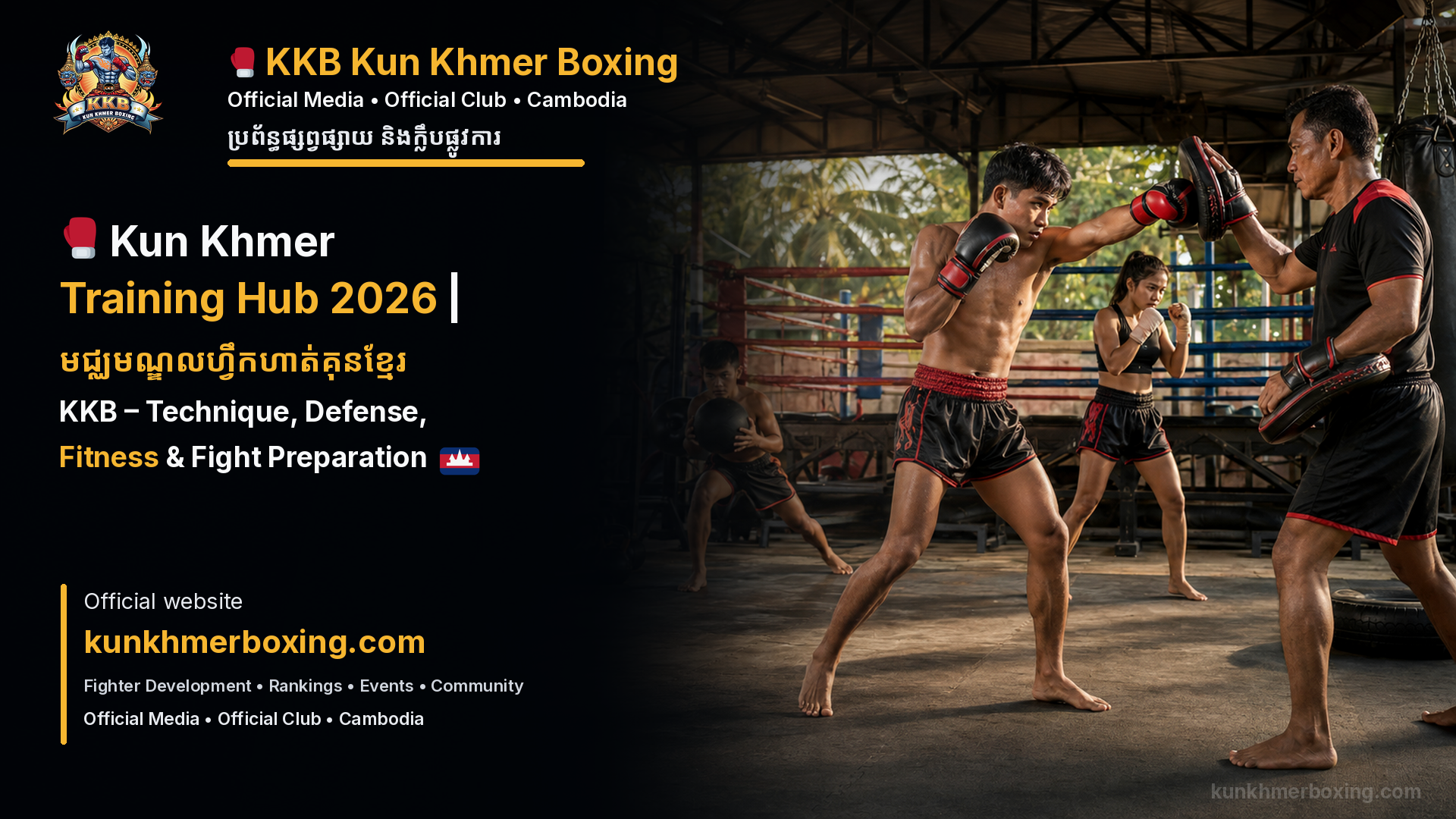
🥊 Kun Khmer Training Hub 2026 | មជ្ឈមណ្ឌលហ្វឹកហាត់គុនខ្មែរ KKB – Technique, Defense, Fitness & Fight Preparation 🇰🇭 🥊 Kun Khmer Training Hub 2026 | មជ្ឈមណ្ឌលហ្វឹកហាត់គុនខ្មែរ KKB – Technique, Defense, Fitness & Fight Preparation 🇰🇭
🥊 Kun Khmer Training Hub 2026 | មជ្ឈមណ្ឌលហ្វឹកហាត់គុនខ្មែរ KKB – Technique, Defense, Fitness & Fight Preparation 🇰🇭 គឺជាកំណត់ត្រា គុនខ្មែរ ក្នុងមូលដ្ឋានទិន្នន័យ KKB។
English
Welcome to the official KKB Kun Khmer Training Hub, a complete training centre for beginners, young athletes, women, experienced fighters, coaches and international visitors who want to improve authentic Cambodian Kun Khmer step by step.
សូមស្វាគមន៍មកកាន់ មជ្ឈមណ្ឌលហ្វឹកហាត់គុនខ្មែរ KKB ដែលជាប្រភពពេញលេញសម្រាប់អ្នកចាប់ផ្តើម យុវជន ស្ត្រី អ្នកប្រដាល់មានបទពិសោធន៍ គ្រូបង្វឹក និងភ្ញៀវអន្តរជាតិ ដែលចង់អភិវឌ្ឍគុនខ្មែរពិតប្រាកដជាបន្តបន្ទាប់។
This page connects the full KKB training system: warm-up, stance, guard, punches, kicks, teep, elbows, knees, footwork, distance, timing, defense, counters, clinch, sparring, conditioning, nutrition, recovery and fight preparation.
ទំព័រនេះភ្ជាប់ប្រព័ន្ធហ្វឹកហាត់ KKB ទាំងមូល៖ កម្តៅរាងកាយ ជំហរ guard កណ្តាប់ដៃ ទាត់ teep កែង ជង្គង់ ចលនាជើង ចម្ងាយ ពេលវេលា ការពារ វាយតប ក្លីន ស្ប៉ារីង កម្លាំងកាយ អាហារូបត្ថម្ភ ការស្តារខ្លួន និងការរៀបចំប្រកួត។
Un centre d’entraînement structuré pour apprendre le Kun Khmer avec méthode, sécurité et progression.
Do not train only to look powerful. Train to stay balanced, control distance, protect yourself, score clearly and make good decisions under pressure.
កុំហ្វឹកហាត់តែដើម្បីមើលទៅខ្លាំង។ ហ្វឹកហាត់ដើម្បីរក្សាតុល្យភាព គ្រប់គ្រងចម្ងាយ ការពារខ្លួន រកពិន្ទុច្បាស់ និងសម្រេចចិត្តបានល្អក្រោមសម្ពាធ។
🕒 Train at KKB Battambang | ម៉ោងហ្វឹកហាត់ KKB បាត់ដំបង
The online Training Hub can be followed at any time. For in-person training at KKB Kun Khmer Boxing Battambang Club & Gym, please use the club schedule below.
មជ្ឈមណ្ឌលហ្វឹកហាត់អនឡាញអាចប្រើបានគ្រប់ពេល។ សម្រាប់ការហ្វឹកហាត់ផ្ទាល់នៅ ក្លឹប KKB គុនខ្មែរ បាត់ដំបង សូមមើលកាលវិភាគខាងក្រោម។
| Days | ថ្ងៃ | Hours | ម៉ោង | Activity | សកម្មភាព |
|---|---|---|
| Tuesday–Saturday ថ្ងៃអង្គារ–ថ្ងៃសៅរ៍ |
3:30 PM–5:30 PM ម៉ោង ៣:៣០–៥:៣០ ល្ងាច |
Regular group training ការហ្វឹកហាត់ជាក្រុមធម្មតា |
| Sunday ថ្ងៃអាទិត្យ |
Variable — confirm first អាចផ្លាស់ប្តូរ — សូមបញ្ជាក់ជាមុន |
Interclub exchanges and special activities អន្តរក្លឹប និងសកម្មភាពពិសេស |
| Monday ថ្ងៃចន្ទ |
Appointment only តាមការណាត់ប៉ុណ្ណោះ |
Private lessons and organised groups មេរៀនឯកជន និងក្រុមរៀបចំ |
Please contact KKB before travelling. Schedules can change for events, interclubs or coach availability. Training support is presented as a suggested contribution that helps children, athletes, equipment and club development.
សូមទាក់ទង KKB មុនធ្វើដំណើរ។ កាលវិភាគអាចផ្លាស់ប្តូរតាមព្រឹត្តិការណ៍ អន្តរក្លឹប ឬភាពទំនេររបស់គ្រូ។ ការគាំទ្រហ្វឹកហាត់ត្រូវបានបង្ហាញជាការរួមចំណែកដែលជួយកុមារ កីឡាករ សម្ភារៈ និងការអភិវឌ្ឍក្លឹប។
2. KKB Training Overview | ទិដ្ឋភាពទូទៅការហ្វឹកហាត់ KKB 🥊🇰🇭
The KKB training system is designed to produce technically reliable, balanced and intelligent fighters. It does not begin with maximum power. It begins with posture, guard, distance, timing, balance and control.
ប្រព័ន្ធហ្វឹកហាត់ KKB ត្រូវបានបង្កើតឡើង ដើម្បីអភិវឌ្ឍអ្នកប្រដាល់ដែលមានបច្ចេកទេសត្រឹមត្រូវ តុល្យភាព និងការសម្រេចចិត្តឆ្លាតវៃ។ វាមិនចាប់ផ្តើមពីកម្លាំងអតិបរមាទេ ប៉ុន្តែចាប់ផ្តើមពីជំហរ guard ចម្ងាយ ពេលវេលា តុល្យភាព និងការគ្រប់គ្រង។
Every technique should answer five questions:
- Am I balanced before the strike?
- Am I protected while attacking?
- Is the distance correct?
- Can I return immediately to guard?
- Can I exit safely after scoring?
បច្ចេកទេសនីមួយៗគួរឆ្លើយសំណួរប្រាំ៖
- តើខ្ញុំមានតុល្យភាពមុនវាយទេ?
- តើខ្ញុំការពារខ្លួននៅពេលវាយទេ?
- តើចម្ងាយត្រឹមត្រូវទេ?
- តើខ្ញុំអាចត្រឡប់មក guard ភ្លាមៗទេ?
- តើខ្ញុំអាចចេញដោយសុវត្ថិភាពបន្ទាប់ពីរកពិន្ទុទេ?
This approach is especially important in Kun Khmer because fighters use punches, kicks, elbows, knees and clinch techniques. Good technique must connect attack, defense and movement in one continuous system.
វិធីសាស្ត្រនេះសំខាន់ជាពិសេសក្នុងគុនខ្មែរ ព្រោះអ្នកប្រដាល់ប្រើកណ្តាប់ដៃ ទាត់ កែង ជង្គង់ និងក្លីន។ បច្ចេកទេសល្អត្រូវភ្ជាប់ការវាយ ការពារ និងចលនាជាប្រព័ន្ធតែមួយ។
| KKB priority | Training objective | គោលដៅហ្វឹកហាត់ |
|---|---|---|
| Technique | Use efficient mechanics without unnecessary tension. | ប្រើចលនាមានប្រសិទ្ធភាព ដោយមិនតានតឹងលើសកម្រិត។ |
| Return to guard | Protect openings immediately after every strike. | ការពារចន្លោះភ្លាមៗ បន្ទាប់ពីវាយគ្រប់លើក។ |
| Distance | Attack only from a range where the technique can score. | វាយតែពីចម្ងាយដែលបច្ចេកទេសអាចរកពិន្ទុបាន។ |
| Timing | Strike when the opponent is moving, open or unbalanced. | វាយពេលគូប្រកួតកំពុងផ្លាស់ទី បើកចន្លោះ ឬបាត់តុល្យភាព។ |
| Defense | Reduce damage and create counter opportunities. | កាត់បន្ថយរបួស និងបង្កើតឱកាសវាយតប។ |
| Footwork | Enter, exit and create angles without crossing the feet. | ចូល ចេញ និងបង្កើតមុំ ដោយមិនឆ្លងជើង។ |
| Conditioning | Maintain form and decision-making under fatigue. | រក្សាបច្ចេកទេស និងការសម្រេចចិត្តពេលអស់កម្លាំង។ |
| Respect | Train safely and protect partners during practice. | ហ្វឹកហាត់ដោយសុវត្ថិភាព និងការពារដៃគូ។ |
Learn more about the club philosophy through the KKB philosophy of scoring, control and avoiding unnecessary damage.
3. How to Use This Training Hub | របៀបប្រើមជ្ឈមណ្ឌលហ្វឹកហាត់ 🧭
This Training Hub can be used in four different ways depending on your current goal.
មជ្ឈមណ្ឌលហ្វឹកហាត់នេះអាចប្រើបានបួនរបៀប អាស្រ័យលើគោលដៅបច្ចុប្បន្នរបស់អ្នក។
| Your goal | Start here | គោលដៅ និងផ្លូវចាប់ផ្តើម |
|---|---|---|
| Follow a complete plan | KKB Weekly Training Schedule | អនុវត្តតាម កាលវិភាគហ្វឹកហាត់ប្រចាំសប្តាហ៍ KKB។ |
| Start as a beginner | Kun Khmer Beginners Guide | ចាប់ផ្តើមពី មគ្គុទ្ទេសក៍អ្នកចាប់ផ្តើម។ |
| Improve technique | Kun Khmer Techniques | កែលម្អតាម បច្ចេកទេសគុនខ្មែរ។ |
| Improve defense | Defense and Counters | ហ្វឹកហាត់ ការពារ និងវាយតប។ |
| Improve fight cardio | 10s/20s Conditioning | ប្រើ លំហាត់ ១០ វិនាទី / ២០ វិនាទី។ |
| Train at home | Home Training | ប្រើកម្មវិធី ហ្វឹកហាត់នៅផ្ទះ។ |
| Prepare for professional fights | Professional Training Schedule | ប្រើ កាលវិភាគអ្នកអាជីព។ |
Recommended Learning Order | លំដាប់សិក្សាដែលបានណែនាំ
- Warm-up and mobility.
- Stance and guard.
- Footwork and distance.
- Basic punches and teep.
- Kicks, knees and elbows.
- Defense and counters.
- Clinch positioning.
- Controlled sparring.
- Conditioning and recovery.
- Fight strategy and competition preparation.
លំដាប់ដែលបានណែនាំ៖ កម្តៅរាងកាយ → ជំហរ និង guard → ចលនាជើង និងចម្ងាយ → កណ្តាប់ដៃ និង teep → ទាត់ ជង្គង់ និងកែង → ការពារ និងវាយតប → ក្លីន → ស្ប៉ារីង → កម្លាំងកាយ និងស្តារខ្លួន → យុទ្ធសាស្ត្រប្រកួត។
Golden rule: If your technique becomes uncontrolled, reduce speed or power. Do not continue repeating poor movement at maximum intensity.
ច្បាប់មាស៖ ប្រសិនបើបច្ចេកទេសរបស់អ្នកបាត់ការគ្រប់គ្រង សូមបន្ថយល្បឿន ឬកម្លាំង។ កុំបន្តធ្វើចលនាខុសៗគ្នាដោយកម្លាំងអតិបរមា។
4. KKB Training Principles | គោលការណ៍ហ្វឹកហាត់ KKB 🧠✅
KKB training is based on progression, technical clarity and controlled intensity. The goal is not to make every session feel like a fight. The goal is to improve the athlete’s ability to perform correctly when a real fight becomes difficult.
ការហ្វឹកហាត់ KKB ផ្អែកលើការរីកចម្រើនជាបន្តបន្ទាប់ ភាពច្បាស់លាស់នៃបច្ចេកទេស និងកម្រិតខ្លាំងដែលមានការគ្រប់គ្រង។ គោលដៅមិនមែនធ្វើឱ្យគ្រប់វគ្គមានអារម្មណ៍ដូចការប្រកួតទេ ប៉ុន្តែដើម្បីឱ្យកីឡាករអាចអនុវត្តបានត្រឹមត្រូវ ពេលការប្រកួតពិតប្រាកដកាន់តែពិបាក។
1. Quality Before Quantity | គុណភាពមុនបរិមាណ
Twenty technically correct repetitions are more useful than one hundred rushed repetitions. Every repetition should reinforce balance, guard, distance and return.
ការធ្វើចលនាត្រឹមត្រូវ ២០ លើក មានប្រយោជន៍ជាងការធ្វើរហ័ស ១០០ លើកដោយខុសបច្ចេកទេស។ គ្រប់លើកគួរពង្រឹងតុល្យភាព guard ចម្ងាយ និងការត្រឡប់មកការពារ។
2. Technique Before Power | បច្ចេកទេសមុនកម្លាំង
Power should come from correct mechanics, timing and weight transfer. Excessive tension usually reduces speed, balance and accuracy.
កម្លាំងគួរមកពីចលនាត្រឹមត្រូវ ពេលវេលា និងការផ្ទេរទម្ងន់។ ការតានតឹងលើសកម្រិត ជាទូទៅបន្ថយល្បឿន តុល្យភាព និងភាពត្រឹមត្រូវ។
3. Defense Is Part of Every Attack | ការពារជាផ្នែកនៃការវាយ
A strike is incomplete if the athlete remains open after throwing it. Every punch, kick, knee or elbow should finish with protection, position and an exit option.
ការវាយមិនពេញលេញទេ ប្រសិនបើកីឡាករបើកចន្លោះបន្ទាប់ពីវាយ។ កណ្តាប់ដៃ ទាត់ ជង្គង់ ឬកែង គួរបញ្ចប់ដោយការពារ ទីតាំង និងជម្រើសចេញ។
4. Distance Before Combination | ចម្ងាយមុនក្បាច់បន្ត
A perfect combination cannot score if the distance is wrong. Athletes must learn when to step, when to stop and when to exit.
ក្បាច់បន្តល្អឥតខ្ចោះក៏មិនអាចរកពិន្ទុបានទេ ប្រសិនបើចម្ងាយខុស។ កីឡាករត្រូវរៀនពេលចូល ពេលឈប់ និងពេលចេញ។
5. Controlled Sparring Before Hard Sparring | ស្ប៉ារីងមានការគ្រប់គ្រងមុនស្ប៉ារីងខ្លាំង
Controlled rounds allow athletes to practise decisions, timing and defense without unnecessary damage. Hard sparring should be limited, purposeful and supervised.
ស្ប៉ារីងមានការគ្រប់គ្រង អនុញ្ញាតឱ្យកីឡាករហ្វឹកហាត់ការសម្រេចចិត្ត ពេលវេលា និងការពារ ដោយមិនបង្ករបួសមិនចាំបាច់។ ស្ប៉ារីងខ្លាំងគួរមានកម្រិត គោលបំណង និងការត្រួតពិនិត្យ។
6. Recovery Is Training | ការស្តារខ្លួនក៏ជាការហ្វឹកហាត់
Adaptation happens after training. Sleep, food, hydration, mobility and rest determine whether the athlete becomes stronger or simply becomes more tired.
ការរីកចម្រើនកើតឡើងបន្ទាប់ពីហ្វឹកហាត់។ ការគេង អាហារ ទឹក ចលនា និងការសម្រាក កំណត់ថាកីឡាករនឹងខ្លាំងឡើង ឬគ្រាន់តែអស់កម្លាំងជាងមុន។
7. Respect Protects the Team | ការគោរពការពារក្រុម
Training partners are not opponents to defeat. They are people who help each other improve. Control, communication and respect are essential in every drill.
ដៃគូហ្វឹកហាត់មិនមែនជាគូប្រកួតដែលត្រូវផ្តួលទេ។ ពួកគេជាមនុស្សដែលជួយគ្នារីកចម្រើន។ ការគ្រប់គ្រង ទំនាក់ទំនង និងការគោរព មានសារៈសំខាន់ក្នុងគ្រប់លំហាត់។
For more technical articles, visit the Kun Khmer Techniques and Strategies section and the Kun Khmer Training Tips section.
5. The 8 KKB Training Pillars | សសរស្តម្ភហ្វឹកហាត់ KKB ៨ 🧱🥊
The KKB training system is organised around eight connected pillars. A fighter becomes complete when these areas develop together rather than separately.
ប្រព័ន្ធហ្វឹកហាត់ KKB ត្រូវបានរៀបចំជុំវិញសសរស្តម្ភចំនួន ៨ ដែលភ្ជាប់គ្នា។ អ្នកប្រដាល់ក្លាយជាកីឡាករពេញលេញ នៅពេលផ្នែកទាំងនេះអភិវឌ្ឍជាមួយគ្នា មិនមែនដាច់ដោយឡែកទេ។
| Pillar | Main objective | គោលដៅសំខាន់ |
|---|---|---|
| 1. Warm-Up and Mobility | Prepare joints, muscles, balance and movement before intensity. | រៀបចំសន្លាក់ សាច់ដុំ តុល្យភាព និងចលនា មុនបង្កើនកម្រិត។ |
| 2. Technique and Guard | Strike efficiently and return immediately to protection. | វាយមានប្រសិទ្ធភាព និងត្រឡប់មកការពារភ្លាមៗ។ |
| 3. Footwork and Distance | Enter, score, exit and control range safely. | ចូល វាយ ចេញ និងគ្រប់គ្រងចម្ងាយដោយសុវត្ថិភាព។ |
| 4. Timing and Decision-Making | Recognise openings and choose the right response. | ស្គាល់ឱកាស និងជ្រើសរើសការឆ្លើយតបត្រឹមត្រូវ។ |
| 5. Defense and Counters | Reduce damage and create scoring opportunities. | កាត់បន្ថយរបួស និងបង្កើតឱកាសរកពិន្ទុ។ |
| 6. Clinch and Close Range | Control posture, balance, knees and short weapons. | គ្រប់គ្រងជំហរ តុល្យភាព ជង្គង់ និងអាវុធចម្ងាយជិត។ |
| 7. Conditioning | Maintain technical quality and concentration under fatigue. | រក្សាគុណភាពបច្ចេកទេស និងការផ្តោតអារម្មណ៍ពេលអស់កម្លាំង។ |
| 8. Recovery and Discipline | Allow adaptation, consistency and long-term progression. | អនុញ្ញាតឱ្យរាងកាយស្តារ រក្សាភាពទៀងទាត់ និងរីកចម្រើនរយៈពេលវែង។ |
Why the Pillars Must Work Together | ហេតុអ្វីសសរស្តម្ភត្រូវដំណើរការជាមួយគ្នា
A fighter may have powerful kicks but poor balance. Another may have excellent cardio but weak defensive habits. KKB training aims to identify these imbalances and create a more complete athlete.
អ្នកប្រដាល់ម្នាក់អាចទាត់ខ្លាំង ប៉ុន្តែតុល្យភាពខ្សោយ។ អ្នកផ្សេងទៀតអាចមានកម្លាំងបេះដូងល្អ ប៉ុន្តែការពារមិនល្អ។ ការហ្វឹកហាត់ KKB មានគោលបំណងស្វែងរកភាពមិនសមតុល្យទាំងនេះ និងអភិវឌ្ឍកីឡាករឱ្យពេញលេញជាងមុន។
- Technique without distance cannot score reliably.
- Power without balance creates openings.
- Conditioning without technique reinforces poor movement.
- Defense without counters can become passive.
- Attack without recovery leads to technical breakdown.
- បច្ចេកទេសគ្មានចម្ងាយ មិនអាចរកពិន្ទុបានទៀងទាត់។
- កម្លាំងគ្មានតុល្យភាព បង្កើតចន្លោះឱ្យគូប្រកួត។
- កម្លាំងកាយគ្មានបច្ចេកទេស អាចពង្រឹងចលនាខុស។
- ការពារគ្មានវាយតប អាចក្លាយជាការរង់ចាំតែប៉ុណ្ណោះ។
- ការវាយដោយគ្មានស្តារខ្លួន ធ្វើឱ្យបច្ចេកទេសខូច។
6. KKB Weekly Training Plan | ផែនការហ្វឹកហាត់ប្រចាំសប្តាហ៍ KKB 📅
The KKB weekly plan divides training into focused days so athletes can repeat essential skills without trying to practise everything at maximum intensity in every session.
ផែនការប្រចាំសប្តាហ៍ KKB បែងចែកការហ្វឹកហាត់ទៅតាមថ្ងៃដែលមានគោលដៅច្បាស់ ដើម្បីឱ្យកីឡាករអាចធ្វើជំនាញសំខាន់ៗឡើងវិញ ដោយមិនព្យាយាមហ្វឹកហាត់គ្រប់យ៉ាងក្នុងកម្រិតអតិបរមារាល់វគ្គ។
Main programme: KKB Weekly Training Schedule | កាលវិភាគហ្វឹកហាត់ប្រចាំសប្តាហ៍ KKB
Important distinction: the six-day weekly plan below is an educational training structure. It is not the physical opening schedule of KKB Battambang. The club’s regular group sessions are Tuesday to Saturday, generally from 3:30 PM to 5:30 PM; Monday is by appointment, and Sunday is mainly reserved for confirmed interclub activities.
ការបញ្ជាក់សំខាន់៖ ផែនការហ្វឹកហាត់ ៦ ថ្ងៃខាងក្រោម គឺជារចនាសម្ព័ន្ធសិក្សា មិនមែនជាម៉ោងបើកផ្ទាល់របស់ក្លឹប KKB បាត់ដំបងទេ។ ការហ្វឹកហាត់ជាក្រុមធម្មតា គឺពីថ្ងៃអង្គារដល់ថ្ងៃសៅរ៍ ជាទូទៅម៉ោង ៣:៣០ ដល់ ៥:៣០ ល្ងាច។ ថ្ងៃចន្ទតាមការណាត់ និងថ្ងៃអាទិត្យជាចម្បងសម្រាប់អន្តរក្លឹបដែលបានបញ្ជាក់។
| Day | Main focus | KKB objective | Training page |
|---|---|---|---|
| Day 1 – Monday | Outfighter distance and jab control | Manage long range, enter safely and score with the lead hand. | Open Day 1 |
| Day 2 – Tuesday | Teep and range control | Stop forward pressure and control the opponent’s rhythm. | Open Day 2 |
| Day 3 – Wednesday | Long kicks and kick control | Improve setup, balance, return and defensive recovery. | Open Day 3 |
| Day 4 – Thursday | Defense and counters | Check, block, slip, pivot and return with control. | Open Day 4 |
| Day 5 – Friday | Conditioning intervals | Maintain technique during repeated high-intensity efforts. | Open Day 5 |
| Day 6 – Saturday | Mixed review and skill consolidation | Connect the week’s skills in controlled drills and sparring. | Open Day 6 |
The weekly structure can be adapted. Beginners may train two or three days, while experienced competitors may add morning conditioning, strength work, clinch sessions or professional preparation.
រចនាសម្ព័ន្ធប្រចាំសប្តាហ៍អាចកែសម្រួលបាន។ អ្នកចាប់ផ្តើមអាចហ្វឹកហាត់ពីរ ឬបីថ្ងៃ ខណៈអ្នកប្រដាល់មានបទពិសោធន៍អាចបន្ថែមកម្លាំងកាយពេលព្រឹក ការហាត់កម្លាំង ក្លីន ឬការរៀបចំអាជីព។
Videos KKB Kun Khmer Training | ការហ្វឹកហាត់គុនខ្មែរ KKB បាត់ដំបង
Use this official KKB playlist alongside the weekly programme to observe real training sessions, technical drills, children’s development, conditioning, movement, pad work and group activities at KKB Kun Khmer Boxing Battambang.
ប្រើបញ្ជីវីដេអូផ្លូវការ KKB នេះជាមួយផែនការប្រចាំសប្តាហ៍ ដើម្បីទស្សនាការហ្វឹកហាត់ពិតប្រាកដ លំហាត់បច្ចេកទេស ការអភិវឌ្ឍកុមារ កម្លាំងកាយ ចលនា កាន់ផេដ និងសកម្មភាពជាក្រុមនៅក្លឹប KKB បាត់ដំបង។
How to Adjust the Weekly Plan | របៀបកែសម្រួលផែនការប្រចាំសប្តាហ៍
| Training level | Recommended frequency | Suggested approach |
|---|---|---|
| Complete beginner | 2–3 sessions per week | Technique, mobility, basic footwork and light conditioning. |
| Regular recreational athlete | 3–4 sessions per week | Follow the weekly plan with moderate conditioning. |
| Developing fighter | 4–6 sessions per week | Add sparring, clinch, strength and event preparation. |
| Professional fighter | Multiple sessions according to camp phase | Use a personalised plan with coach supervision and recovery control. |
| Child or young beginner | 2–4 age-appropriate sessions | Prioritise coordination, discipline, technique and enjoyment. |
More training is not always better. The athlete should increase volume only when technique, recovery, sleep and motivation remain stable.
ការហ្វឹកហាត់ច្រើនជាង មិនតែងតែល្អជាងទេ។ កីឡាករគួរបង្កើនបរិមាណតែនៅពេលបច្ចេកទេស ការស្តារខ្លួន ការគេង និងកម្លាំងចិត្តនៅតែមានស្ថិរភាព។
7. Skill Roadmap: Beginner to Advanced | ផែនទីជំនាញពីអ្នកចាប់ផ្តើមដល់កម្រិតខ្ពស់ 🧩
Progress in Kun Khmer should be based on demonstrated skill rather than only the number of months spent in a gym. Athletes progress at different speeds depending on attendance, coordination, coaching, fitness and previous experience.
ការរីកចម្រើនក្នុងគុនខ្មែរ គួរផ្អែកលើជំនាញដែលអាចបង្ហាញបាន មិនមែនតែចំនួនខែដែលបានហ្វឹកហាត់ទេ។ កីឡាករម្នាក់ៗរីកចម្រើនខុសគ្នា អាស្រ័យលើការចូលហាត់ ការសម្របសម្រួល គ្រូ កាយសម្បទា និងបទពិសោធន៍ពីមុន។
Stage 1: Foundation Beginner | ដំណាក់កាលទី១៖ មូលដ្ឋានអ្នកចាប់ផ្តើម 🟢
- Understand basic stance and guard.
- Move forward, backward and laterally without crossing the feet.
- Perform jab, cross, teep and basic round kick with control.
- Return immediately to guard after every strike.
- Complete light rounds without losing posture.
- Follow safety instructions and communicate with partners.
- យល់ពីជំហរ និង guard មូលដ្ឋាន។
- ផ្លាស់ទីទៅមុខ ថយក្រោយ និងចំហៀង ដោយមិនឆ្លងជើង។
- អនុវត្ត jab, cross, teep និងទាត់មូលដ្ឋានដោយការគ្រប់គ្រង។
- ត្រឡប់មក guard ភ្លាមៗបន្ទាប់ពីវាយ។
- បញ្ចប់ជុំស្រាល ដោយមិនបាត់ជំហរ។
- គោរពការណែនាំសុវត្ថិភាព និងទំនាក់ទំនងជាមួយដៃគូ។
Recommended pages:
- Kun Khmer Beginners Guide
- Warm-Up and Stretching
- KKB Shadow Boxing
- Jab-Only Shadow Boxing
- Step-In Step-Out Footwork
Stage 2: Developing Intermediate | ដំណាក់កាលទី២៖ កម្រិតមធ្យម 🟡
- Use combinations without losing balance.
- Control distance with jab, teep and footwork.
- Defend common punches and kicks.
- Create angles after attacking.
- Use simple feints and reactions.
- Participate in controlled technical sparring.
- Maintain good technique under moderate fatigue.
- ប្រើក្បាច់បន្តដោយមិនបាត់តុល្យភាព។
- គ្រប់គ្រងចម្ងាយដោយ jab, teep និងចលនាជើង។
- ការពារកណ្តាប់ដៃ និងការទាត់ទូទៅ។
- បង្កើតមុំបន្ទាប់ពីវាយ។
- ប្រើ feint និងការឆ្លើយតបមូលដ្ឋាន។
- ចូលរួមស្ប៉ារីងបច្ចេកទេសដែលមានការគ្រប់គ្រង។
- រក្សាបច្ចេកទេសពេលអស់កម្លាំងមធ្យម។
- Angle Exit Drill
- Jab-Cross Exit Drill
- Feint to Jab Reaction Drill
- Jab to Low Kick Drill
- Controlled Sparring and Counters
Stage 3: Advanced Technical Fighter | ដំណាក់កាលទី៣៖ អ្នកប្រដាល់បច្ចេកទេសកម្រិតខ្ពស់ 🔴
- Adapt style according to the opponent.
- Control rhythm, range and ring position.
- Use layered feints and setups.
- Defend and counter automatically under pressure.
- Connect long range, mid-range and clinch.
- Maintain tactical discipline while tired.
- Understand scoring, rounds and event strategy.
- កែសម្រួលស្ទីលតាមគូប្រកួត។
- គ្រប់គ្រងចង្វាក់ ចម្ងាយ និងទីតាំងសង្វៀន។
- ប្រើ feint និង setup ច្រើនជាន់។
- ការពារ និងវាយតបដោយស្វ័យប្រវត្តិក្រោមសម្ពាធ។
- ភ្ជាប់ចម្ងាយវែង មធ្យម និងក្លីន។
- រក្សាវិន័យយុទ្ធសាស្ត្រពេលអស់កម្លាំង។
- យល់ពីការរកពិន្ទុ ជុំ និងយុទ្ធសាស្ត្រព្រឹត្តិការណ៍។
- Advanced Kun Khmer Techniques
- Fighting Strategies
- Teep Entry and Exit Patterns
- Punch Defense and Counters
- Kick Defense, Check and Return
Stage 4: Competition Preparation | ដំណាក់កាលទី៤៖ ការរៀបចំប្រកួត 🏆
Competition preparation is not simply harder general training. It should be specific to the athlete, opponent, weight, event date, rules and current physical condition.
ការរៀបចំប្រកួត មិនមែនគ្រាន់តែហ្វឹកហាត់ទូទៅឱ្យខ្លាំងជាងមុនទេ។ វាគួរសមស្របតាមកីឡាករ គូប្រកួត ទម្ងន់ កាលបរិច្ឆេទ ច្បាប់ និងស្ថានភាពរាងកាយបច្ចុប្បន្ន។
- Opponent and style analysis.
- Fight-specific technical priorities.
- Round structure and energy management.
- Controlled high-intensity sparring.
- Weight and nutrition management.
- Recovery and injury monitoring.
- Reduced volume before competition when appropriate.
Professional athletes should use the KKB professional weekly training schedule together with direct coach supervision.
8. Technical Foundations | មូលដ្ឋានបច្ចេកទេស 🥋
Technical foundations are the movements that support every advanced combination and strategy. Athletes should revisit them regularly, including experienced professionals.
មូលដ្ឋានបច្ចេកទេស គឺជាចលនាដែលគាំទ្រក្បាច់បន្ត និងយុទ្ធសាស្ត្រកម្រិតខ្ពស់ទាំងអស់។ កីឡាករគួរត្រឡប់មកហ្វឹកហាត់វាជាប្រចាំ រួមទាំងអ្នកអាជីពមានបទពិសោធន៍។
Stance and Balance | ជំហរ និងតុល្យភាព
A strong stance allows movement in every direction without becoming rigid. The feet should support attack, defense, checking kicks and clinch entry.
ជំហរល្អអនុញ្ញាតឱ្យផ្លាស់ទីគ្រប់ទិស ដោយមិនរឹងខ្លាំង។ ជើងគួរគាំទ្រការវាយ ការពារ check kick និងការចូលក្លីន។
- Keep the knees relaxed.
- Distribute weight so both movement and defense remain available.
- Avoid standing too narrow or too wide.
- Do not cross the feet during basic movement.
- Return to a stable base after every strike.
Guard and Protection | Guard និងការពារ
The guard is not a fixed pose. It changes slightly according to distance, opponent, attack and defensive requirement.
Guard មិនមែនជាជំហរថេរទេ។ វាប្រែប្រួលបន្តិចតាមចម្ងាយ គូប្រកួត ការវាយ និងតម្រូវការការពារ។
- Protect the chin and central line.
- Keep the shoulders relaxed.
- Do not allow the elbows to separate unnecessarily.
- Return the hand immediately after punching.
- Recover posture after kicks and knees.
Basic Weapons | អាវុធមូលដ្ឋាន
| Technique | Primary purpose | Common technical priority |
|---|---|---|
| Jab | Measure distance, interrupt rhythm and create openings. | Fast return to guard and stable shoulder position. |
| Cross | Score with rear-hand power through correct rotation. | Do not overreach or lose rear-foot balance. |
| Teep | Control range, stop forward movement and disrupt balance. | Retract the leg quickly and recover stance. |
| Round kick | Score with shin contact to leg, body or head. | Rotate correctly and return without remaining exposed. |
| Knee | Attack body or head at close and mid-range. | Maintain posture and protect against counters. |
| Elbow | Use short-range angles and openings. | Practise carefully with controlled contact. |
Technical training resources:
- Kun Khmer Techniques Hub
- Advanced Techniques
- KKB Teep Technique Basics
- Jab to Low Kick Drill
- Techniques and Strategies
9. Footwork and Distance Control | ចលនាជើង និងការគ្រប់គ្រងចម្ងាយ 👣🎯
Footwork is the system that connects attack, defense, balance and ring position. A fighter who cannot control distance will struggle to use even technically correct punches, kicks, knees or elbows.
ចលនាជើង គឺជាប្រព័ន្ធដែលភ្ជាប់ការវាយ ការពារ តុល្យភាព និងទីតាំងលើសង្វៀន។ អ្នកប្រដាល់ដែលមិនអាចគ្រប់គ្រងចម្ងាយ នឹងពិបាកប្រើកណ្តាប់ដៃ ទាត់ ជង្គង់ ឬកែង ទោះបីបច្ចេកទេសត្រឹមត្រូវក៏ដោយ។
KKB footwork training does not focus on unnecessary movement. Every step should serve a purpose: enter, score, defend, create an angle, recover balance or exit safely.
ការហ្វឹកហាត់ចលនាជើង KKB មិនផ្តោតលើការផ្លាស់ទីដោយគ្មានគោលដៅទេ។ គ្រប់ជំហានគួរមានមុខងារ៖ ចូល វាយ ការពារ បង្កើតមុំ ស្តារតុល្យភាព ឬចេញដោយសុវត្ថិភាព។
The Main Distance Zones | តំបន់ចម្ងាយសំខាន់ៗ
| Distance | Main weapons | Main objective | គោលដៅសំខាន់ |
|---|---|---|---|
| Outside range | Footwork, feints, observation | Read the opponent and prepare entry. | អានគូប្រកួត និងរៀបចំការចូល។ |
| Long range | Jab, teep, long kick | Control rhythm and score without remaining close. | គ្រប់គ្រងចង្វាក់ និងរកពិន្ទុដោយមិននៅជិតយូរ។ |
| Mid-range | Punch combinations, body kicks, knees | Connect attacks while protecting against counters. | ភ្ជាប់ការវាយ និងការពារការវាយតប។ |
| Close range | Elbows, short knees, clinch entries | Control posture, position and balance. | គ្រប់គ្រងជំហរ ទីតាំង និងតុល្យភាព។ |
| Clinch range | Knees, turns, off-balancing | Dominate structure and create scoring opportunities. | គ្រប់គ្រងរចនាសម្ព័ន្ធ និងបង្កើតឱកាសរកពិន្ទុ។ |
Basic Footwork Patterns | លំនាំចលនាជើងមូលដ្ឋាន
- Step in: close distance without leaning forward.
- Step out: leave the opponent’s attack range while maintaining guard.
- Lateral step: move sideways without crossing the feet.
- Pivot: change angle around the lead or rear foot.
- Angle exit: leave after attacking instead of retreating in a straight line.
- Reset: recover stance and balance before the next action.
- ចូលជំហាន៖ បិទចម្ងាយដោយមិនទម្លាក់ខ្លួនទៅមុខ។
- ថយជំហាន៖ ចេញពីចម្ងាយវាយរបស់គូប្រកួត ខណៈរក្សា guard។
- ជំហានចំហៀង៖ ផ្លាស់ទីទៅចំហៀងដោយមិនឆ្លងជើង។
- Pivot៖ ប្តូរមុំជុំវិញជើងមុខ ឬជើងក្រោយ។
- ចេញតាមមុំ៖ ចេញបន្ទាប់ពីវាយ ជំនួសការថយត្រង់។
- Reset៖ ស្តារជំហរ និងតុល្យភាព មុនសកម្មភាពបន្ទាប់។
Distance-Control Drills | លំហាត់គ្រប់គ្រងចម្ងាយ
- Step-In Step-Out Footwork Drill
- Angle Exit Drill
- Jab-Cross Exit Drill
- Teep Entry and Exit Patterns
- Jab-Only Shadow Boxing
- Feint to Jab Reaction Drill
Common Footwork Errors | កំហុសចលនាជើងទូទៅ
| Error | Consequence | Correction |
|---|---|---|
| Crossing the feet | Loss of balance and slower defense. | Use small, controlled steps and maintain stance width. |
| Standing too wide | Difficult movement and slow kick checks. | Narrow the stance enough to move freely. |
| Standing too narrow | Poor stability against kicks and clinch pressure. | Maintain a stable base without becoming rigid. |
| Leaning during entry | Creates openings and reduces punching balance. | Move the feet before extending the body. |
| Retreating only in a straight line | Allows the opponent to continue pressure. | Add lateral steps and angle exits. |
| Moving without purpose | Wastes energy and creates predictable habits. | Connect each step to attack, defense or position. |
Good footwork should appear simple. The objective is not to dance around the ring, but to arrive in the correct position before the opponent and leave before the counterattack.
ចលនាជើងល្អគួរមើលទៅសាមញ្ញ។ គោលដៅមិនមែនរាំជុំវិញសង្វៀនទេ ប៉ុន្តែចូលដល់ទីតាំងត្រឹមត្រូវមុនគូប្រកួត និងចេញមុនការវាយតប។
10. Defense and Counters | ការពារ និងវាយតប 🛡️⚡
Defense is not simply avoiding damage. Effective defense should preserve balance, keep the athlete in a useful position and create an opportunity to counter.
ការពារ មិនមែនគ្រាន់តែជៀសវាងរបួសទេ។ ការពារមានប្រសិទ្ធភាពគួររក្សាតុល្យភាព ទុកកីឡាករនៅទីតាំងល្អ និងបង្កើតឱកាសវាយតប។
KKB teaches defense as a continuous sequence:
See → protect → move → counter → reset.
មើលឃើញ → ការពារ → ផ្លាស់ទី → វាយតប → Reset។
Main Defensive Tools | ឧបករណ៍ការពារសំខាន់ៗ
| Defense | Used against | Main priority | អាទិភាពសំខាន់ |
|---|---|---|---|
| High guard | Punches and head attacks | Protect without losing vision or posture. | ការពារដោយមិនបាត់ការមើលឃើញ ឬជំហរ។ |
| Parry | Straight punches | Use a small movement and return immediately. | ប្រើចលនាតូច និងត្រឡប់មកភ្លាមៗ។ |
| Slip | Jab and cross | Move the head while keeping the body balanced. | ផ្លាស់ទីក្បាល ខណៈរក្សាតុល្យភាពរាងកាយ។ |
| Pivot | Forward pressure and combinations | Exit the attack line and create an angle. | ចេញពីបន្ទាត់វាយ និងបង្កើតមុំ។ |
| Kick check | Low and body kicks | Lift the leg with balance and return quickly. | លើកជើងដោយតុល្យភាព និងដាក់ចុះលឿន។ |
| Teep defense | Front kicks | Parry, step, catch or redirect safely. | Parry, ផ្លាស់ជំហាន ចាប់ ឬបង្វែរដោយសុវត្ថិភាព។ |
| Clinch frame | Close-range pressure | Protect posture and prevent uncontrolled entry. | ការពារជំហរ និងទប់ការចូលដោយគ្មានការគ្រប់គ្រង។ |
Counterattacking Principles | គោលការណ៍វាយតប
- Counter only when balance is stable.
- Use the shortest appropriate weapon.
- Do not admire the counter; return to guard.
- Exit after scoring if the position becomes unsafe.
- Choose simple counters before complex combinations.
- Train recognition and reaction, not only memorised sequences.
- វាយតបតែនៅពេលតុល្យភាពមានស្ថិរភាព។
- ប្រើអាវុធខ្លី និងសមស្របបំផុត។
- កុំឈរមើលការវាយតប ត្រូវត្រឡប់មក guard។
- ចេញបន្ទាប់ពីរកពិន្ទុ ប្រសិនបើទីតាំងមិនសុវត្ថិភាព។
- ជ្រើសរើសការវាយតបសាមញ្ញ មុនក្បាច់ស្មុគស្មាញ។
- ហ្វឹកហាត់ការមើលឃើញ និងប្រតិកម្ម មិនមែនតែចងចាំលំដាប់។
Useful KKB Defense Resources | ធនធានការពារ KKB
- Day 4 Defense and Counters
- Punch Defense: Block, Slip and Counter
- Kick Defense: Check and Return
- Controlled Sparring Defense and Counters
- Fighting Strategies
Defense Progression Drill | លំហាត់ការពារជាបន្តបន្ទាប់
| Stage | Drill | Objective |
|---|---|---|
| 1 | Partner attacks with one known technique. | Learn the correct defensive shape. |
| 2 | Partner chooses between two attacks. | Develop recognition and reaction. |
| 3 | Add a simple counter after defense. | Connect protection and scoring. |
| 4 | Add footwork and angle exit. | Finish in a safer position. |
| 5 | Use controlled technical sparring. | Apply the sequence under realistic pressure. |
Athletes should avoid becoming defensive without purpose. The objective is not to remain permanently covered. It is to protect, recognise the opening and regain initiative.
កីឡាករគួរជៀសវាងការការពារដោយគ្មានគោលដៅ។ គោលដៅមិនមែនគ្របខ្លួនជាប់រហូតទេ ប៉ុន្តែការពារ ស្គាល់ឱកាស និងយកការគ្រប់គ្រងត្រឡប់មកវិញ។
11. Teep and Kick System | ប្រព័ន្ធ Teep និងការទាត់ 🦶🦵
The teep and round kick are central long-range weapons in Kun Khmer. KKB trains them as part of a complete system involving setup, distance, timing, balance, defense and recovery.
Teep និងការទាត់ជុំ ជាអាវុធចម្ងាយវែងសំខាន់ក្នុងគុនខ្មែរ។ KKB ហ្វឹកហាត់វាជាប្រព័ន្ធពេញលេញ ដែលរួមមាន setup ចម្ងាយ ពេលវេលា តុល្យភាព ការពារ និងការស្តារជំហរ។
The Teep | Teep គ្រប់គ្រងចម្ងាយ
The teep is not only a pushing kick. It can measure range, stop pressure, break rhythm, disturb balance, create space and prepare another attack.
Teep មិនមែនគ្រាន់តែជាការធាក់រុញទេ។ វាអាចវាស់ចម្ងាយ បញ្ឈប់សម្ពាធ បំបែកចង្វាក់ រំខានតុល្យភាព បង្កើតចន្លោះ និងរៀបចំការវាយបន្ទាប់។
| Teep use | Purpose | Technical priority |
|---|---|---|
| Lead teep | Fast range control and interruption. | Quick extension and immediate retraction. |
| Rear teep | Stronger impact and balance disruption. | Do not lean excessively backward. |
| Body teep | Stop forward pressure and score. | Use correct distance and hip alignment. |
| Hip or thigh teep | Interrupt movement and stance. | Control power during partner training. |
| Feint teep | Create reactions and openings. | Keep the fake realistic and balanced. |
| Teep to exit | Create space before leaving range. | Recover stance before moving away. |
Round Kicks | ការទាត់ជុំ
A good round kick should combine correct setup, hip rotation, shin contact, guard, balance and fast return. Power alone is not enough if the athlete remains exposed after the kick.
ការទាត់ជុំល្អ ត្រូវរួមបញ្ចូល setup ត្រឹមត្រូវ ការបង្វិលត្រគាក ការប៉ះដោយឆ្អឹងកំភួនជើង guard តុល្យភាព និងការត្រឡប់លឿន។ កម្លាំងតែមួយមិនគ្រប់គ្រាន់ទេ ប្រសិនបើកីឡាករបើកចន្លោះបន្ទាប់ពីទាត់។
| Kick | Main target | Main tactical purpose |
|---|---|---|
| Low kick | Thigh and leg | Damage movement and stance. |
| Body kick | Ribs, arm and body | Score clearly and reduce opponent comfort. |
| High kick | Head and guard | Exploit openings after setup. |
| Switch kick | Body or head from lead side | Change rhythm and angle. |
| Double kick | Repeated target or changing level | Break defensive timing. |
| Kick after jab | Leg or body | Use the hand to disguise the kick. |
Kick Training Progression | ការរីកចម្រើនក្នុងការហ្វឹកហាត់ទាត់
- Practise the movement slowly without power.
- Add balance and guard recovery.
- Use a bag or pad with technical control.
- Add a setup such as jab, feint or step.
- Add defense after the kick.
- Add an angle exit or second attack.
- Apply in controlled sparring.
លំដាប់ហ្វឹកហាត់៖ ចលនាយឺត → តុល្យភាព និង guard → បាវ ឬផេដ → setup → ការពារបន្ទាប់ពីទាត់ → ចេញតាមមុំ ឬវាយបន្ត → អនុវត្តក្នុងស្ប៉ារីងមានការគ្រប់គ្រង។
Do not kick harder than your ability to recover balance. A powerful kick that leaves the athlete vulnerable is technically incomplete.
កុំទាត់ខ្លាំងជាងសមត្ថភាពស្តារតុល្យភាពរបស់អ្នក។ ការទាត់ខ្លាំងដែលធ្វើឱ្យកីឡាករបើកចន្លោះ គឺជាបច្ចេកទេសមិនទាន់ពេញលេញ។
12. Clinch, Knees and Elbows | ក្លីន ជង្គង់ និងកែង 🤼♂️
Clinch training develops posture, balance, close-range control, knee attacks, turns, frames and the ability to remain composed under physical pressure.
ការហ្វឹកហាត់ក្លីន អភិវឌ្ឍជំហរ តុល្យភាព ការគ្រប់គ្រងចម្ងាយជិត ការវាយជង្គង់ ការបង្វិល frame និងសមត្ថភាពរក្សាភាពស្ងប់ស្ងាត់ក្រោមសម្ពាធរាងកាយ។
Clinch is not simply pulling the opponent’s head down. Effective clinch work requires body position, grip awareness, hip control, foot placement and timing.
ក្លីនមិនមែនគ្រាន់តែទាញក្បាលគូប្រកួតចុះទេ។ ក្លីនមានប្រសិទ្ធភាព ត្រូវការទីតាំងរាងកាយ ការយល់ពីការចាប់ ការគ្រប់គ្រងត្រគាក ទីតាំងជើង និងពេលវេលា។
Core Clinch Skills | ជំនាញក្លីនមូលដ្ឋាន
- Maintain upright posture.
- Protect the neck and inside position.
- Control the opponent’s arms and shoulders.
- Use foot position to create turns.
- Break the opponent’s balance before kneeing.
- Frame safely when entering or exiting.
- Do not rely only on upper-body strength.
- រក្សាជំហរត្រង់។
- ការពារក និងទីតាំងខាងក្នុង។
- គ្រប់គ្រងដៃ និងស្មាគូប្រកួត។
- ប្រើទីតាំងជើងដើម្បីបង្វិល។
- បំបែកតុល្យភាពគូប្រកួតមុនវាយជង្គង់។
- ប្រើ frame ដោយសុវត្ថិភាពពេលចូល ឬចេញ។
- កុំពឹងតែកម្លាំងផ្នែកខាងលើ។
Knee Techniques | បច្ចេកទេសជង្គង់
| Knee | Range | Main priority |
|---|---|---|
| Straight knee | Mid and close range | Drive through the target while protecting posture. |
| Curved knee | Clinch range | Create angle around the opponent’s guard. |
| Short knee | Tight clinch | Use balance and position instead of excessive space. |
| Step knee | Entry range | Coordinate step, hip and guard. |
| Jumping knee | Advanced entry | Use only with correct setup and control. |
Elbow Training | ការហ្វឹកហាត់កែង
Elbows are effective short-range weapons but require strict control in training. Most technical practice should use pads, shadow work or carefully supervised drills.
កែងជាអាវុធចម្ងាយជិតមានប្រសិទ្ធភាព ប៉ុន្តែត្រូវការការគ្រប់គ្រងខ្ពស់ក្នុងការហ្វឹកហាត់។ ការអនុវត្តភាគច្រើនគួរប្រើផេដ shadow ឬលំហាត់ដែលមានការត្រួតពិនិត្យយ៉ាងប្រុងប្រយ័ត្ន។
- Horizontal elbow.
- Diagonal elbow.
- Upward elbow.
- Downward elbow.
- Spinning elbow for advanced athletes.
- Elbow after frame or clinch break.
Elbow sparring should not be treated like normal punching sparring. Direct contact can cause serious cuts and injuries. Use protective methods, controlled targets and coach supervision.
ស្ប៉ារីងកែង មិនគួរធ្វើដូចស្ប៉ារីងកណ្តាប់ដៃធម្មតាទេ។ ការប៉ះផ្ទាល់អាចបង្ករបួស និងរបួសកាត់ធ្ងន់។ ត្រូវប្រើវិធីការពារ គោលដៅដែលមានការគ្រប់គ្រង និងការត្រួតពិនិត្យពីគ្រូ។
Clinch Training Progression | លំដាប់ហ្វឹកហាត់ក្លីន
- Posture and hand position without resistance.
- Inside-position drills.
- Controlled pummelling.
- Knee technique with light contact.
- Turns and off-balancing.
- Situational clinch rounds.
- Controlled competitive clinch rounds.
Clinch rounds should stop when posture and technical control disappear. Continuing with uncontrolled pulling and excessive force usually teaches poor habits.
ជុំក្លីនគួរឈប់នៅពេលជំហរ និងការគ្រប់គ្រងបច្ចេកទេសបាត់។ ការបន្តទាញដោយគ្មានការគ្រប់គ្រង និងប្រើកម្លាំងលើសកម្រិត ជាទូទៅបង្រៀនទម្លាប់មិនល្អ។
13. Controlled Sparring | ស្ប៉ារីងមានការគ្រប់គ្រង 🥊🤝
Sparring is a training method, not a daily fight. Its purpose is to develop timing, distance, reactions, decision-making and tactical confidence against a live partner.
ស្ប៉ារីងគឺជាវិធីហ្វឹកហាត់ មិនមែនជាការប្រកួតរាល់ថ្ងៃទេ។ គោលបំណងគឺអភិវឌ្ឍពេលវេលា ចម្ងាយ ប្រតិកម្ម ការសម្រេចចិត្ត និងទំនុកចិត្តយុទ្ធសាស្ត្រជាមួយដៃគូរស់។
Good sparring should allow both athletes to learn. The stronger or more experienced partner has a responsibility to control power, pace and technique.
ស្ប៉ារីងល្អគួរអនុញ្ញាតឱ្យកីឡាករទាំងពីររៀន។ ដៃគូដែលខ្លាំង ឬមានបទពិសោធន៍ជាង មានទំនួលខុសត្រូវក្នុងការគ្រប់គ្រងកម្លាំង ល្បឿន និងបច្ចេកទេស។
Types of Sparring | ប្រភេទស្ប៉ារីង
| Type | Purpose | Recommended intensity |
|---|---|---|
| Technical sparring | Practise clean movement, defense and combinations. | Light and controlled. |
| Situational sparring | Train a specific position, range or tactical problem. | Light to moderate. |
| Defense-only rounds | Develop recognition, protection and exits. | Controlled attack intensity. |
| Jab-only or teep-only rounds | Improve distance and timing with limited weapons. | Light to moderate. |
| Clinch sparring | Practise posture, turns and knees. | Controlled according to experience. |
| Competition sparring | Prepare an experienced fighter for event pressure. | Planned, supervised and limited. |
Rules for Safe Sparring | ច្បាប់សម្រាប់ស្ប៉ារីងដោយសុវត្ថិភាព
- Agree on intensity before starting.
- Use suitable gloves and protective equipment.
- Match partners by size, skill and control.
- Stop immediately if someone is hurt or disoriented.
- Do not increase power because of ego or frustration.
- Avoid uncontrolled elbows and dangerous techniques.
- Listen to coach instructions at all times.
- Reduce intensity when technique breaks down.
- ព្រមព្រៀងកម្រិតខ្លាំងមុនចាប់ផ្តើម។
- ប្រើស្រោមដៃ និងសម្ភារៈការពារសមស្រប។
- ផ្គូផ្គងដៃគូតាមទំហំ ជំនាញ និងការគ្រប់គ្រង។
- ឈប់ភ្លាម ប្រសិនបើមានអ្នករបួស ឬវង្វេងស្មារតី។
- កុំបង្កើនកម្លាំងដោយអារម្មណ៍ ឬអំណួត។
- ជៀសវាងកែង និងបច្ចេកទេសគ្រោះថ្នាក់ដែលគ្មានការគ្រប់គ្រង។
- ស្តាប់ការណែនាំរបស់គ្រូគ្រប់ពេល។
- បន្ថយកម្រិត នៅពេលបច្ចេកទេសខូច។
Sparring Objectives by Level | គោលដៅស្ប៉ារីងតាមកម្រិត
| Level | Main objective | What to avoid |
|---|---|---|
| Beginner | Stay balanced, keep guard and recognise simple attacks. | Hard contact, complex combinations and ego. |
| Intermediate | Use distance, counters, angles and controlled combinations. | Repeating only favourite attacks. |
| Advanced | Apply strategy, rhythm changes and style adaptation. | Unnecessary damage and uncontrolled intensity. |
| Professional camp | Prepare for opponent, rounds and event pressure. | Excessive volume close to competition. |
Recommended sparring resources:
- KKB Sparring Guide
- Controlled Sparring: Defense and Counters
- Day 6 Mixed Review and Skill Consolidation
- Fighting Strategies
The best sparring partner is not the person who hurts you most. It is the person who gives you realistic problems while helping you improve safely.
ដៃគូស្ប៉ារីងល្អបំផុត មិនមែនជាអ្នកដែលធ្វើឱ្យអ្នកឈឺចាប់ជាងគេទេ។ គឺជាអ្នកដែលផ្តល់បញ្ហាពិតប្រាកដ និងជួយអ្នករីកចម្រើនដោយសុវត្ថិភាព។
14. Fighter Conditioning | កម្លាំងកាយអ្នកប្រដាល់ 🔥💪
Fighter conditioning should improve the athlete’s ability to maintain technique, balance, breathing and decision-making during repeated high-intensity efforts. The objective is not simply to become tired.
ការហ្វឹកហាត់កម្លាំងកាយអ្នកប្រដាល់ គួរអភិវឌ្ឍសមត្ថភាពរក្សាបច្ចេកទេស តុល្យភាព ដង្ហើម និងការសម្រេចចិត្ត ក្នុងពេលខំប្រឹងខ្លាំងជាបន្តបន្ទាប់។ គោលដៅមិនមែនគ្រាន់តែធ្វើឱ្យអស់កម្លាំងទេ។
Conditioning must support fighting skill. When fatigue causes the guard to drop, stance to collapse or technique to become uncontrolled, the athlete should reduce intensity and recover correct form.
កម្លាំងកាយត្រូវគាំទ្រជំនាញប្រយុទ្ធ។ នៅពេលអស់កម្លាំងធ្វើឱ្យ guard ចុះ ជំហរខូច ឬបច្ចេកទេសបាត់ការគ្រប់គ្រង កីឡាករគួរបន្ថយកម្រិត និងស្តារទម្រង់ត្រឹមត្រូវ។
Main Conditioning Qualities | គុណភាពកម្លាំងកាយសំខាន់ៗ
| Quality | Purpose | គោលបំណង |
|---|---|---|
| Aerobic endurance | Recover between rounds and repeated exchanges. | ស្តារដង្ហើមរវាងជុំ និងការវាយបន្តបន្ទាប់។ |
| Anaerobic capacity | Perform short, intense attacks and combinations. | អនុវត្តការវាយខ្លាំងខ្លីៗ និងក្បាច់បន្ត។ |
| Strength endurance | Maintain posture, guard, clinch and strike quality. | រក្សាជំហរ guard ក្លីន និងគុណភាពការវាយ។ |
| Explosive power | Accelerate strikes, entries and counters. | បង្កើនល្បឿនការវាយ ការចូល និងការវាយតប។ |
| Recovery speed | Calm breathing and return to efficient movement. | ស្តារដង្ហើម និងត្រឡប់ទៅចលនាមានប្រសិទ្ធភាព។ |
| Mental endurance | Maintain concentration and discipline under fatigue. | រក្សាការផ្តោតអារម្មណ៍ និងវិន័យពេលអស់កម្លាំង។ |
KKB 10s/20s Interval Method | វិធីសាស្ត្រ KKB ១០ វិនាទី / ២០ វិនាទី
The KKB conditioning system frequently uses short intervals such as 10 seconds fast followed by 20 seconds controlled recovery. This teaches the athlete to accelerate, recover breathing and repeat technical work without becoming completely rigid.
ប្រព័ន្ធកម្លាំងកាយ KKB ជាញឹកញាប់ប្រើ interval ខ្លីៗ ដូចជា ១០ វិនាទីលឿន បន្ទាប់ដោយ ២០ វិនាទីស្តារដោយការគ្រប់គ្រង។ វាបង្រៀនកីឡាករឱ្យបង្កើនល្បឿន ស្តារដង្ហើម និងធ្វើបច្ចេកទេសឡើងវិញដោយមិនរឹងខ្លាំង។
| Interval phase | Example action | Coaching objective |
|---|---|---|
| 10 seconds fast | Fast straight punches, knees, kicks or shadow combinations. | High output with correct guard and balance. |
| 20 seconds calm | Light movement, controlled breathing and stance recovery. | Reduce tension and prepare for the next effort. |
| Repeated rounds | Eight to fifteen minutes depending on level. | Develop repeatable fight-specific effort. |
- Day 5 Conditioning Intervals
- Shadow Flurry Conditioning Intervals
- KKB Fitness Resources
- Kun Khmer Workouts
Conditioning Session Example | ឧទាហរណ៍វគ្គកម្លាំងកាយ
| Block | Exercise | Duration | Main focus |
|---|---|---|---|
| Warm-up | Mobility, light shadow boxing and footwork | 10–15 minutes | Prepare joints and breathing. |
| Technical preparation | Two simple combinations at moderate speed | 10 minutes | Establish correct form. |
| Main intervals | 10 seconds fast / 20 seconds calm | 8–15 minutes | Repeat high-quality effort. |
| Specific rounds | Bag, pads or shadow boxing | 3–5 rounds | Apply conditioning to fight movement. |
| Cool-down | Slow movement, stretching and breathing | 5–10 minutes | Start recovery. |
Conditioning should be adapted to age, experience, health, competition schedule and recovery. Children, beginners and athletes returning from injury should not follow the same volume as professional fighters.
កម្លាំងកាយគួរត្រូវបានកែសម្រួលតាមអាយុ បទពិសោធន៍ សុខភាព កាលវិភាគប្រកួត និងការស្តារខ្លួន។ កុមារ អ្នកចាប់ផ្តើម និងកីឡាករត្រឡប់ពីរបួស មិនគួរធ្វើបរិមាណដូចអ្នកអាជីពទេ។
15. Women, Children and Beginners | ស្ត្រី កុមារ និងអ្នកចាប់ផ្តើម 👑👦🌱
Kun Khmer training can be adapted to different people, but responsible coaching must consider age, experience, physical condition, confidence and individual goals.
ការហ្វឹកហាត់គុនខ្មែរអាចកែសម្រួលសម្រាប់មនុស្សខុសៗគ្នា ប៉ុន្តែគ្រូដែលមានទំនួលខុសត្រូវ ត្រូវគិតពីអាយុ បទពិសោធន៍ ស្ថានភាពរាងកាយ ទំនុកចិត្ត និងគោលដៅបុគ្គល។
Beginners | អ្នកចាប់ផ្តើម
Beginners should not be expected to perform advanced combinations, hard sparring or professional conditioning immediately. The first priority is to build safe habits.
អ្នកចាប់ផ្តើមមិនគួរត្រូវបានរំពឹងឱ្យធ្វើក្បាច់ស្មុគស្មាញ ស្ប៉ារីងខ្លាំង ឬកម្លាំងកាយអាជីពភ្លាមៗទេ។ អាទិភាពដំបូងគឺបង្កើតទម្លាប់ដោយសុវត្ថិភាព។
- Learn stance and guard.
- Develop coordination and breathing.
- Use simple punches, teep and basic kicks.
- Practise short rounds with good form.
- Introduce defense before hard contact.
- Build consistency before increasing volume.
Start with the Kun Khmer Beginners Guide, warm-up resources and KKB shadow boxing.
Women and Girls | ស្ត្រី និងក្មេងស្រី
Women and girls can train Kun Khmer for fitness, confidence, technique, self-protection, competition or professional development. Training quality should not be reduced, but contact, progression and partner selection must remain appropriate.
ស្ត្រី និងក្មេងស្រីអាចហ្វឹកហាត់គុនខ្មែរសម្រាប់កាយសម្បទា ទំនុកចិត្ត បច្ចេកទេស ការពារខ្លួន ការប្រកួត ឬការអភិវឌ្ឍអាជីព។ គុណភាពហ្វឹកហាត់មិនគួរត្រូវបានបន្ថយទេ ប៉ុន្តែកម្រិតប៉ះទង្គិច ការរីកចម្រើន និងការជ្រើសដៃគូ ត្រូវសមស្រប។
- Women’s Kun Khmer Training
- Women Kun Khmer Fighters
- Battambang Women Fighters
- Phnom Penh Women Fighters
- Siem Reap Women Fighters
Children and Young Athletes | កុមារ និងកីឡាករវ័យក្មេង
Children’s training should develop coordination, discipline, attention, confidence, respect and enjoyment. It should not simply copy an adult professional fighter’s programme.
ការហ្វឹកហាត់កុមារ គួរអភិវឌ្ឍការសម្របសម្រួល វិន័យ ការផ្តោតអារម្មណ៍ ទំនុកចិត្ត ការគោរព និងភាពរីករាយ។ វាមិនគួរចម្លងកម្មវិធីអ្នកប្រដាល់អាជីពពេញវ័យទាំងស្រុងទេ។
| Children’s training priority | Recommended approach | អាទិភាពសម្រាប់កុមារ |
|---|---|---|
| Coordination | Simple movement games and controlled drills. | ល្បែងចលនាសាមញ្ញ និងលំហាត់មានការគ្រប់គ្រង។ |
| Technique | Short, clear repetitions with frequent correction. | ចលនាខ្លី ច្បាស់ និងកែតម្រូវជាប្រចាំ។ |
| Conditioning | Age-appropriate activity without excessive exhaustion. | សកម្មភាពសមនឹងអាយុ ដោយមិនអស់កម្លាំងលើសកម្រិត។ |
| Contact | Light, supervised and adapted to maturity. | ស្រាល មានការត្រួតពិនិត្យ និងសមនឹងកម្រិតអភិវឌ្ឍ។ |
| Discipline | Teach respect, listening and responsibility. | បង្រៀនការគោរព ការស្តាប់ និងទំនួលខុសត្រូវ។ |
| Progression | Reward consistency and improvement, not aggression. | លើកទឹកចិត្តភាពទៀងទាត់ និងការរីកចម្រើន មិនមែនភាពឈ្លានពាន។ |
16. Professional Fight Preparation | ការរៀបចំប្រកួតអាជីព 🏆🥊
Professional fight preparation should be specific to the athlete, opponent, event date, rules, weight category and current condition. It should not simply mean doing more of every exercise.
ការរៀបចំប្រកួតអាជីព គួរសមស្របតាមកីឡាករ គូប្រកួត កាលបរិច្ឆេទ ច្បាប់ ប្រភេទទម្ងន់ និងស្ថានភាពបច្ចុប្បន្ន។ វាមិនមែនគ្រាន់តែធ្វើលំហាត់គ្រប់យ៉ាងច្រើនជាងមុនទេ។
Main Fight-Camp Phases | ដំណាក់កាលជំរំហ្វឹកហាត់
| Phase | Main objective | Typical focus |
|---|---|---|
| General preparation | Build fitness, mobility and technical consistency. | Base conditioning, strength, technique and correction. |
| Specific preparation | Adapt training to opponent, rules and tactical needs. | Fight combinations, sparring, clinch and strategy. |
| High-intensity phase | Simulate competition demands. | Planned hard rounds, pads and specific conditioning. |
| Taper | Reduce fatigue while maintaining sharpness. | Lower volume, technical speed and recovery. |
| Competition week | Arrive healthy, focused and prepared. | Light technical work, weight control and rest. |
| Post-fight recovery | Recover physically and evaluate performance. | Rest, medical checks, mobility and technical review. |
Opponent-Specific Preparation | ការរៀបចំតាមគូប្រកួត
- Analyse stance, preferred weapons and rhythm.
- Identify dangerous ranges and common entries.
- Choose two or three reliable tactical priorities.
- Prepare defensive responses to the opponent’s strongest attacks.
- Develop simple scoring combinations.
- Train exits and recovery after each planned attack.
- Avoid creating an overly complicated game plan.
- វិភាគជំហរ អាវុធចូលចិត្ត និងចង្វាក់។
- ស្គាល់ចម្ងាយគ្រោះថ្នាក់ និងវិធីចូលទូទៅ។
- ជ្រើសរើសអាទិភាពយុទ្ធសាស្ត្រ ២ ឬ ៣ ដែលអាចទុកចិត្តបាន។
- រៀបចំការពារការវាយខ្លាំងបំផុតរបស់គូប្រកួត។
- អភិវឌ្ឍក្បាច់រកពិន្ទុសាមញ្ញ។
- ហ្វឹកហាត់ការចេញ និងការស្តារជំហរ បន្ទាប់ពីការវាយដែលបានគ្រោង។
- ជៀសវាងផែនការស្មុគស្មាញលើសកម្រិត។
Professional athletes can consult the KKB Professional Weekly Training Schedule, fighting strategies and nutrition and recovery resources.
Competition preparation should remain under direct coach supervision. Weight loss, injury management and high-intensity sparring can create serious risks when handled without qualified guidance.
ការរៀបចំប្រកួតគួរនៅក្រោមការត្រួតពិនិត្យផ្ទាល់ពីគ្រូ។ ការបញ្ចុះទម្ងន់ ការគ្រប់គ្រងរបួស និងស្ប៉ារីងខ្លាំង អាចបង្កគ្រោះថ្នាក់ធ្ងន់ ប្រសិនបើធ្វើដោយគ្មានការណែនាំសមស្រប។
17. Recovery, Nutrition and Injury Prevention | ការស្តារខ្លួន អាហារូបត្ថម្ភ និងការពាររបួស 🥗😴
Training creates stress. Recovery allows the body and mind to adapt. Athletes who ignore recovery may train more but improve less.
ការហ្វឹកហាត់បង្កសម្ពាធលើរាងកាយ។ ការស្តារខ្លួនអនុញ្ញាតឱ្យរាងកាយ និងចិត្តរីកចម្រើន។ កីឡាករដែលមិនយកចិត្តទុកដាក់លើការស្តារខ្លួន អាចហ្វឹកហាត់ច្រើន ប៉ុន្តែរីកចម្រើនតិច។
Main Recovery Priorities | អាទិភាពស្តារខ្លួន
- Consistent sleep.
- Adequate food and protein.
- Regular hydration.
- Light movement and mobility.
- Rest days or reduced-intensity sessions.
- Early management of pain and injuries.
- Mental recovery away from constant competition pressure.
- ការគេងទៀងទាត់។
- អាហារ និងប្រូតេអ៊ីនគ្រប់គ្រាន់។
- ផឹកទឹកជាប្រចាំ។
- ចលនាស្រាល និង mobility។
- ថ្ងៃសម្រាក ឬវគ្គកម្រិតទាប។
- គ្រប់គ្រងការឈឺចាប់ និងរបួសឱ្យបានឆាប់។
- ស្តារផ្លូវចិត្តពីសម្ពាធប្រកួតជាបន្តបន្ទាប់។
Nutrition Basics | មូលដ្ឋានអាហារូបត្ថម្ភ
| Nutrition area | Main role | Practical approach |
|---|---|---|
| Carbohydrates | Fuel training and high-intensity work. | Use rice, fruit, vegetables and suitable local foods. |
| Protein | Support muscle repair and adaptation. | Include eggs, fish, meat, dairy, tofu or legumes. |
| Fats | Support hormones, health and energy. | Use moderate amounts from varied food sources. |
| Hydration | Maintain performance and recovery. | Drink regularly before, during and after training. |
| Micronutrients | Support immunity, recovery and general health. | Eat varied vegetables, fruit and whole foods. |
For more information, visit Nutrition and Recovery, Injury Prevention and Warm-Up and Stretching.
Warning Signs of Poor Recovery | សញ្ញាស្តារខ្លួនមិនល្អ
- Persistent fatigue.
- Declining technique and motivation.
- Sleep problems.
- Repeated minor injuries.
- Loss of appetite or unusual irritability.
- Elevated resting heart rate.
- Reduced concentration during training.
Persistent pain, dizziness, confusion, breathing difficulty or suspected concussion requires appropriate medical evaluation. Training content on this website does not replace professional medical advice.
ការឈឺចាប់ជាប់ៗគ្នា វិលមុខ វង្វេងស្មារតី ពិបាកដកដង្ហើម ឬសង្ស័យថាមានរបួសខួរក្បាល ត្រូវការការពិនិត្យសុខភាពសមស្រប។ មាតិកាហ្វឹកហាត់នៅលើគេហទំព័រនេះ មិនជំនួសដំបូន្មានវេជ្ជសាស្ត្រអាជីពទេ។
18. Home Kun Khmer Training | ហ្វឹកហាត់គុនខ្មែរនៅផ្ទះ 🏠🥊
Home training can maintain technique, mobility, fitness and discipline when a gym session is not available. It cannot fully replace coaching, partner drills, pads, clinch or supervised sparring.
ការហ្វឹកហាត់នៅផ្ទះអាចរក្សាបច្ចេកទេស ចលនា កាយសម្បទា និងវិន័យ នៅពេលមិនអាចទៅក្លឹបបាន។ ប៉ុន្តែវាមិនអាចជំនួសគ្រូ លំហាត់ដៃគូ ផេដ ក្លីន ឬស្ប៉ារីងមានការត្រួតពិនិត្យបានទាំងស្រុងទេ។
Simple Home Session | វគ្គសាមញ្ញនៅផ្ទះ
| Section | Exercise | Time |
|---|---|---|
| Warm-up | Joint mobility, light footwork and breathing | 8–10 minutes |
| Shadow boxing | Guard, jab, teep and basic movement | 3–5 rounds |
| Footwork | Step in, step out, lateral movement and pivots | 10 minutes |
| Technique | One or two focused drills | 15 minutes |
| Conditioning | 10s fast / 20s calm intervals | 6–10 minutes |
| Cool-down | Stretching and controlled breathing | 5–8 minutes |
- Complete Home Training Guide
- Shadow Boxing KKB
- Jab-Only Shadow Boxing
- Step-In Step-Out Footwork
- Angle Exit Drill
Ensure the training area is clear of furniture, slippery surfaces, sharp objects and people who may unexpectedly enter the movement space.
ត្រូវប្រាកដថាទីតាំងហ្វឹកហាត់គ្មានគ្រឿងសង្ហារឹម ផ្ទៃរអិល វត្ថុមុត ឬមនុស្សដែលអាចចូលមកក្នុងតំបន់ចលនាដោយមិនរំពឹង។
19. Common Kun Khmer Training Mistakes | កំហុសហ្វឹកហាត់គុនខ្មែរទូទៅ ⚠️
| Mistake | Why it causes problems | KKB correction |
|---|---|---|
| Using maximum power too early | Technique, balance and guard break down. | Learn the movement slowly, then add speed and power. |
| Failing to return to guard | The athlete remains open after attacking. | Practise “strike, return, reset” every round. |
| Training randomly | Important weaknesses remain uncorrected. | Use the weekly training structure. |
| Ignoring footwork | Good techniques fail because distance is wrong. | Add movement to every technical drill. |
| Hard sparring too often | Creates injury, fear, fatigue and technical decline. | Use technical and situational sparring more frequently. |
| Copying advanced techniques too soon | Creates poor habits without strong foundations. | Master basic stance, guard, distance and defense first. |
| Skipping warm-up | Reduces movement quality and increases injury risk. | Prepare joints, breathing and movement progressively. |
| Ignoring recovery | Performance and motivation decline. | Manage sleep, food, hydration and rest. |
| Training through serious pain | Minor problems can become major injuries. | Stop, assess and seek appropriate guidance. |
| Trying to win every drill | Reduces learning and harms training partners. | Train to improve the team, not to prove superiority. |
The fastest improvement usually comes from fixing basic repeated errors rather than adding more spectacular techniques.
ការរីកចម្រើនលឿនបំផុត ជាទូទៅមកពីការកែកំហុសមូលដ្ឋានដែលកើតឡើងជាញឹកញាប់ មិនមែនពីការបន្ថែមបច្ចេកទេសស្អាតៗកាន់តែច្រើនទេ។
20. KKB Training Resources | ធនធានហ្វឹកហាត់ KKB 🔗📚
📅 Training Plans
🥋 Technique
🛡️ Defense and Movement
🦶 Teep and Kicks
🔥 Fitness and Recovery
👦 Specific Audiences
21. Kun Khmer Training FAQ | សំណួរញឹកញាប់អំពីការហ្វឹកហាត់គុនខ្មែរ ❓
How many days per week should I train Kun Khmer?
Many beginners can start with two or three sessions per week. Regular recreational athletes may train three to five days, while competitive fighters may train more under coach supervision.
តើគួរហ្វឹកហាត់គុនខ្មែរប៉ុន្មានថ្ងៃក្នុងមួយសប្តាហ៍?
អ្នកចាប់ផ្តើមជាច្រើនអាចចាប់ផ្តើមពីពីរ ឬបីវគ្គក្នុងមួយសប្តាហ៍។ អ្នកហ្វឹកហាត់ទៀងទាត់អាចហាត់បីដល់ប្រាំថ្ងៃ ខណៈអ្នកប្រដាល់ប្រកួតអាចហ្វឹកហាត់ច្រើនជាងនេះ ក្រោមការត្រួតពិនិត្យរបស់គ្រូ។
Should I train technique or conditioning first?
Technique should normally come before hard conditioning. Clean movement should be established first, then tested progressively under fatigue.
Is shadow boxing really useful?
Yes. Shadow boxing develops balance, guard, rhythm, footwork, coordination, breathing and technical repetition without requiring equipment.
តើ shadow boxing មានប្រយោជន៍ទេ?
មាន។ Shadow boxing អភិវឌ្ឍតុល្យភាព guard ចង្វាក់ ចលនាជើង ការសម្របសម្រួល ដង្ហើម និងការធ្វើបច្ចេកទេសឡើងវិញ ដោយមិនត្រូវការសម្ភារៈ។
When should beginners start sparring?
Beginners should start only after learning basic stance, guard, movement, defense and control. Initial sparring should be light, technical and supervised.
Is hard sparring necessary?
Hard sparring can have a limited role for experienced competitors, but it should not be frequent, uncontrolled or treated as proof of toughness. Technical and situational sparring should form most sparring practice.
How can I improve fight cardio?
Use a combination of technical rounds, aerobic work, controlled high-intensity intervals and adequate recovery. The KKB 10s/20s method is one option for developing repeated effort.
Can women train Kun Khmer?
Yes. Women can train Kun Khmer for fitness, confidence, technique, competition or professional development. Training should be adapted to the athlete’s level and goals.
Can children train Kun Khmer?
Yes. Children can train with age-appropriate programmes focused on coordination, discipline, confidence, respect and safe technical development.
Can I learn Kun Khmer at home?
You can improve mobility, shadow boxing, footwork, conditioning and basic repetition at home. Coaching and partner training remain important for correction, clinch, pads and sparring.
What equipment do I need?
For basic training, comfortable clothing and water may be enough. Depending on the session, you may also need hand wraps, boxing gloves, shin guards, mouthguard and protective equipment.
How long does it take to become good at Kun Khmer?
There is no fixed timeline. Progress depends on consistency, coaching, physical ability, previous experience, recovery and technical discipline. Strong foundations usually require months and continue developing for years.
Should I train when injured?
Do not ignore significant pain, dizziness, suspected concussion or worsening symptoms. Training may need to be modified or stopped, and appropriate medical advice may be necessary.
What are the KKB Battambang training hours?
Regular group training at KKB Battambang normally runs Tuesday to Saturday from 3:30 PM to 5:30 PM. Monday is available by appointment for private lessons or organised groups. Sunday is mainly reserved for confirmed interclub exchanges and special activities.
តើម៉ោងហ្វឹកហាត់ KKB បាត់ដំបងជាម៉ោងណា?
ការហ្វឹកហាត់ជាក្រុមធម្មតានៅ KKB បាត់ដំបង ជាទូទៅធ្វើពីថ្ងៃអង្គារដល់ថ្ងៃសៅរ៍ ម៉ោង ៣:៣០ ដល់ ៥:៣០ ល្ងាច។ ថ្ងៃចន្ទតាមការណាត់សម្រាប់មេរៀនឯកជន ឬក្រុមរៀបចំ។ ថ្ងៃអាទិត្យជាចម្បងសម្រាប់អន្តរក្លឹប និងសកម្មភាពពិសេសដែលបានបញ្ជាក់។
Where can I train at KKB?
KKB Kun Khmer Boxing Club and Gym is located in Battambang City, Cambodia. Visit the official KKB club profile or the contact page before visiting.
តើខ្ញុំអាចហ្វឹកហាត់នៅ KKB នៅទីណា?
ក្លឹប និងកន្លែងហ្វឹកហាត់ KKB Kun Khmer Boxing ស្ថិតនៅក្រុងបាត់ដំបង ប្រទេសកម្ពុជា។ សូមមើល ប្រវត្តិក្លឹប KKB ផ្លូវការ ឬ ទំព័រទំនាក់ទំនង មុនមកទស្សនា។
🥊 Start Your Kun Khmer Training | ចាប់ផ្តើមហ្វឹកហាត់គុនខ្មែរ 🇰🇭
Train progressively, protect your partners, respect your coaches and build technique before power. Consistent, intelligent training creates stronger fighters and healthier athletes.
ហ្វឹកហាត់ជាបន្តបន្ទាប់ ការពារដៃគូ គោរពគ្រូ និងបង្កើតបច្ចេកទេសមុនកម្លាំង។ ការហ្វឹកហាត់ទៀងទាត់ និងឆ្លាតវៃ បង្កើតអ្នកប្រដាល់ខ្លាំង និងកីឡាករមានសុខភាពល្អ។
ភាសាខ្មែរ
🥊 Kun Khmer Training Hub 2026 | មជ្ឈមណ្ឌលហ្វឹកហាត់គុនខ្មែរ KKB – Technique, Defense, Fitness & Fight Preparation 🇰🇭 គឺជាកំណត់ត្រា គុនខ្មែរ ក្នុងមូលដ្ឋានទិន្នន័យ KKB។
Database context / បរិបទទិន្នន័យ
🥊 Kun Khmer Training Hub 2026 | មជ្ឈមណ្ឌលហ្វឹកហាត់គុនខ្មែរ KKB – Technique, Defense, Fitness & Fight Preparation 🇰🇭 is maintained as a Page record in the KKB master database.
ទិន្នន័យនេះត្រូវបានរក្សាទុក និងធ្វើបច្ចុប្បន្នភាពក្នុងមូលដ្ឋានទិន្នន័យមេ KKB។