
KKB Kick → Check (Defense) 🛡️ Anti-Counter Drill (3 × 10) KKB Kick → Check (Defense) 🛡️ Anti-Counter Drill (3 × 10)
KKB Kick → Check (Defense) 🛡️ Anti-Counter Drill (3 × 10) គឺជាកំណត់ត្រា គុនខ្មែរ ក្នុងមូលដ្ឋានទិន្នន័យ KKB។
English
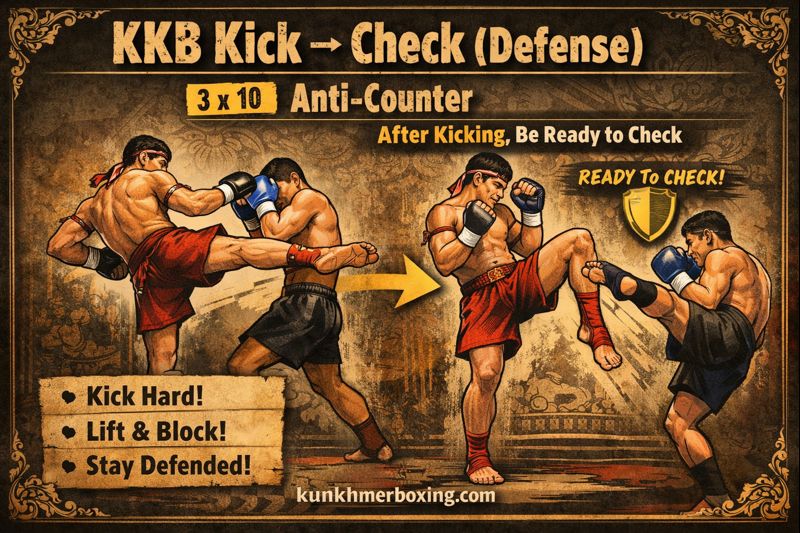
One of the most common ways fighters get punished is simple: they kick… and admire it. 😅 In KKB (Kun Khmer Boxing), every kick must have a defensive “insurance policy.” The best one is the Kick → Check habit: as soon as your kick returns, you’re ready to check the counter 🛡️.
This page teaches you the exact drill: 3 × 10 reps, clean technique cues, timing, footwork, partner options, and the biggest mistakes to avoid.
1. What Is “Kick → Check” in KKB?
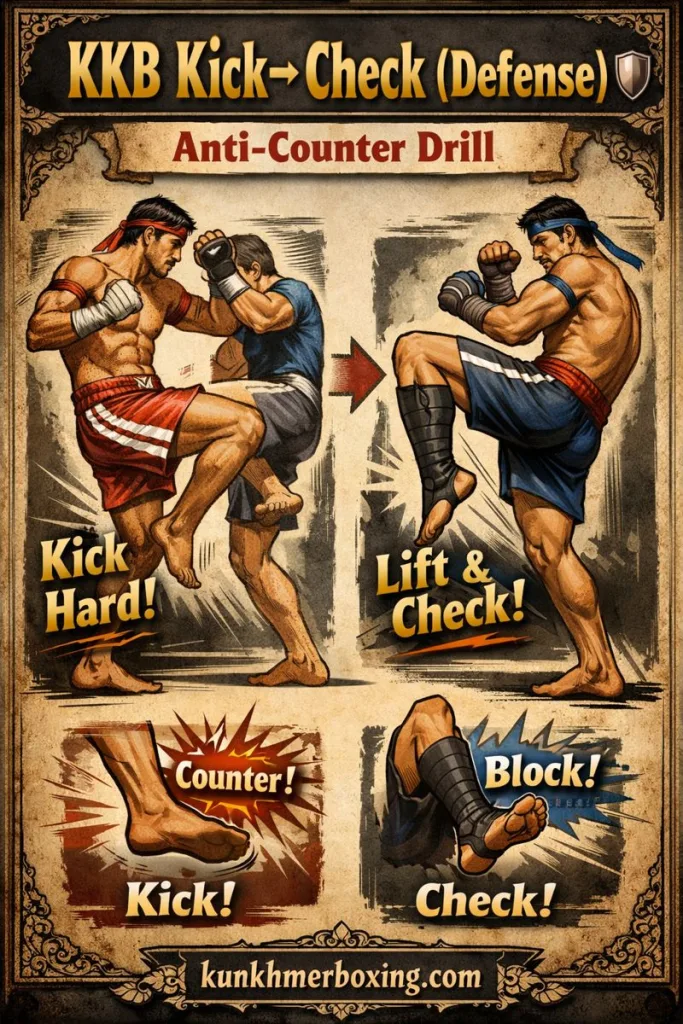
Kick → Check means: after you throw a kick (low kick or body kick), you immediately recover in a way that lets you raise your shin to check the opponent’s counter kick.
In real fights, the opponent often counters with a quick low kick or body kick the moment you land. So the KKB rule is:
- ✅ Kick with balance
- ✅ Return the leg fast
- ✅ Set your weight so you can lift the checking leg instantly
- ✅ Guard stays high the whole time
It’s not only defense — it’s confidence. When you know you can stop the counter, you kick harder and smarter. 💥
2. Why This Defense Stops Counters 🛡️
Most counters work because the kicker is stuck in recovery: weight too heavy, hands dropped, stance broken.
Kick → Check fixes that by building:
- 🧠 Automatic reaction (no thinking needed)
- 🦶 Fast recovery (leg returns under you, not behind you)
- ⚖️ Balanced stance (you can lift to check instantly)
- 🛡️ Shield effect (shin block discourages opponents)
When your partner feels you check every time, they hesitate — and that hesitation gives you control.
3. The Counters You Must Expect
When you kick, expect one of these quick answers:
- 🦵 Low kick counter (fast chop to your base leg)
- 🦶 Body kick counter (especially if your hands drop)
- 🥊 Cross counter (when you over-rotate)
- ↩️ Step-out + kick (angle and return)
Kick → Check mainly protects you from the fastest and most damaging: kick counters. 🛡️
4. Technique Steps (Simple & Clean)
Step 1: Throw the Kick With Balance
- ✅ Eyes up, chin down
- ✅ Hands high (don’t “swim” your arms)
- ✅ Hip turn, but don’t fall forward
Step 2: Return the Leg Fast (Under You)
- ✅ Bring the kicking leg back to stance quickly
- ✅ Don’t leave the leg hanging in the air
- ✅ Land light so you can lift again
Step 3: Be Check-Ready Immediately 🛡️
- ✅ Weight centered (not stuck heavy)
- ✅ Heel light on the floor
- ✅ Your checking knee can lift instantly
Micro-cue: After the kick lands, imagine your next move is already a check.
5. The Drill: 3 × 10 Reps (Solo + Partner)
A) Solo Version (Shadow / Air)
Do 3 sets × 10 reps each side. Focus on clean recovery.
- 1 rep = Kick → Return → Check-ready position (pause 1 second)
- Keep guard high the entire rep 🛡️
B) Heavy Bag Version (If You Use a Bag)
- Kick the bag (low or body)
- Return fast
- Immediately lift into check (touch your shin guard/leg position)
C) Partner Version (Best Anti-Counter)
Partner’s job is to counter lightly after your kick (controlled speed).
- You kick → partner counters with low kick
- You check → reset stance
Important: Start slow. Increase speed only if your form stays clean.
6. Timing & Footwork Keys
The secret is not “checking harder.” The secret is being ready sooner. ⏱️
- 🦶 Land light after the kick (heavy landing = slow check)
- ↩️ Recover to stance, not squared
- 👣 Small step adjustment if needed (don’t freeze)
- 🛡️ Guard never drops (hands protect while legs reset)
Coach cue: “Kick… and come home.” Then check.
7. Progressions (Beginner → Fighter)
Progression 1: Pause Check (Beginner)
Kick → Return → pause 1 second in check-ready stance. Build the habit.
Progression 2: Live Check (Intermediate)
Kick → Return → instant check (no pause). Smooth and fast.
Progression 3: Add Exit (Advanced)
Kick → Return → check → angle exit (left or right). Now you’re safe AND repositioned. ✅
Progression 4: Counter After Check (Fighter)
Kick → Return → check → counter back (jab-cross, teep, or low kick). This turns defense into offense. 🔥
8. Common Mistakes (And Fixes)
- ❌ Slow leg return → ✅ snap back under your hips
- ❌ Landing heavy → ✅ land light, heel ready to lift
- ❌ Hands drop on the kick → ✅ keep guard high the whole time 🛡️
- ❌ Over-rotating → ✅ turn the hip, not your whole body
- ❌ Square stance after kick → ✅ return to fighting stance immediately
9. Keep Training (KKB Silo Links) 📚
Want your kick game to become complete? Use these internal pages:
- ✅ Technique hub: Kun Khmer Techniques
- 🦵 Long weapons focus: Day 3 – Kick Control (Long Weapons)
- 🥊 Drill for body kick mechanics: Step-In Body Kick (Rear Leg)
- 🛡️ Improve defense: Day 4 – Defense & Counters
- 🔥 Warm-up + mobility: Warm-Up & Stretching
- 👊 Skills for sparring: Sparring Training
- 🧤 Protect yourself: Injury Prevention
10. FAQ ❓
Why do I need to check right after kicking?
Because many opponents counter with a fast low kick the moment your leg comes down. Kick → Check protects your base and stops the easiest counter.
Which kicks work best for this drill?
Start with low kick and body kick. Once the habit is strong, add step-kicks and kick feints.
How often should I train Kick → Check?
2–4 times per week is great. Even 3 × 10 reps at the start of training builds the habit quickly.
Can I use this in sparring safely?
Yes, as long as both partners keep it controlled. Start light and focus on clean checks, not power counters.
What if I lose balance after kicking?
That usually means you’re over-rotating or landing heavy. Reduce power, tighten stance, and focus on returning the leg under your hips.
ភាសាខ្មែរ
KKB Kick → Check (Defense) 🛡️ Anti-Counter Drill (3 × 10) គឺជាកំណត់ត្រា គុនខ្មែរ ក្នុងមូលដ្ឋានទិន្នន័យ KKB។
Database context / បរិបទទិន្នន័យ
KKB Kick → Check (Defense) 🛡️ Anti-Counter Drill (3 × 10) is maintained as a Page record in the KKB master database.
ទិន្នន័យនេះត្រូវបានរក្សាទុក និងធ្វើបច្ចុប្បន្នភាពក្នុងមូលដ្ឋានទិន្នន័យមេ KKB។