Kun Khmer vs Muay Thai: rules, culture and scoring គុនខ្មែរ និងមួយថៃ៖ កតិកា វប្បធម៌ និងការដាក់ពិន្ទុ
Kun Khmer and Muay Thai share many striking tools, but a fighter’s nationality does not determine the rules of a bout. Start with the named discipline, sanctioning body and event regulations.
គុនខ្មែរ និងមួយថៃមានក្បាច់វាយជាច្រើនស្រដៀងគ្នា ប៉ុន្តែសញ្ជាតិរបស់អ្នកប្រដាល់មិនកំណត់កតិកានៃគូប្រកួតទេ។ ត្រូវមើលឈ្មោះវិញ្ញាសា ស្ថាប័នទទួលស្គាល់ និងកតិការបស់ព្រឹត្តិការណ៍ជាមុន។
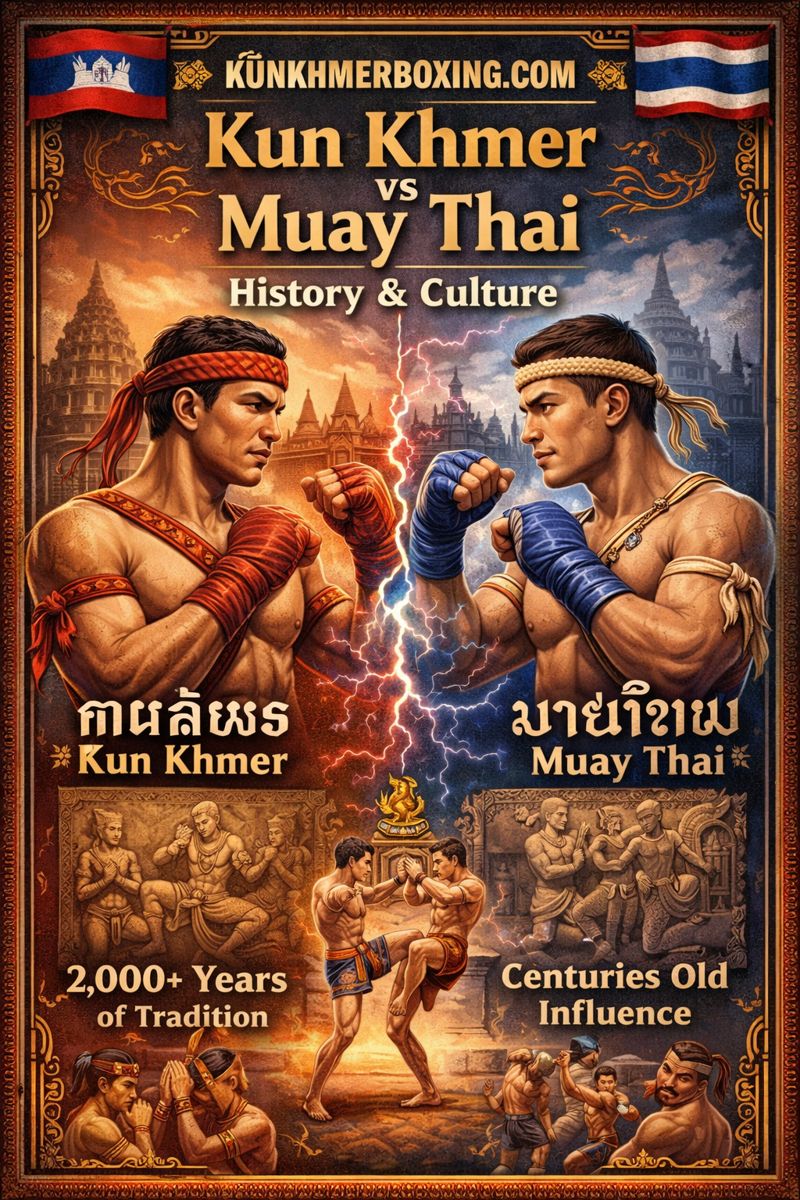
Kun Khmer and Muay Thai share many striking tools, but a fighter’s nationality does not determine the rules of a bout. Start with the named discipline, sanctioning body and event regulations.
| Question | Kun Khmer | Muay Thai |
|---|---|---|
| Core striking tools | Punches, kicks, knees and elbows | Punches, kicks, knees and elbows |
| Close range | Clinch work is part of the sport; read the event rules | Clinch work is part of the sport; the competition code governs it |
| Cultural setting | Cambodian gyms, traditions and promoters | Thai traditions and an international federation and promotion system |
| Bout format | Use the advertised rounds and duration | WMC professional and IFMA competition formats must not be conflated |
Read the contest, not a national stereotype
A technical comparison should describe what the athletes can do and how the bout is judged. It should not claim that every Cambodian advances or that every Thai waits to counter. Watch range, balance, defence and the response to legal clinch work. These are observations about a particular performance, not fixed national characteristics.
Scoring: impact is not simply strike volume
WMC scoring recognises legal, accurate and forceful attacks, together with other criteria in its rulebook. That is not a licence to transfer the WMC judging sheet to every Cambodian event. When KKB discusses a decision, the useful evidence is the applicable code, the official result and, when available, the scorecards. A short highlight cannot reconstruct an entire fight.
Culture deserves its own evidence
Pre-fight rituals and gym traditions give these sports meaning beyond the result. Describe the name used by the athlete or organiser rather than renaming all ceremonies identically. A guide can respect Cambodian and Thai heritage without turning uncertain historical chronology into a competition for ownership.
Keep records comparable
A profile may list several disciplines. Each result should retain its date, opponent, weight and rules. A Kun Khmer athlete appearing on a kickboxing card should have that bout labelled kickboxing. Record a title with its awarding organisation and division instead of treating every championship as interchangeable.
Questions and answers
Does an IFMA rulebook cover every Muay Thai event?
No. IFMA publishes its own competition rules. Professional promotions and other sanctioning bodies may use different formats and equipment.
Can one athlete compete in both sports?
Yes. Keep the discipline attached to each verified bout, and do not assume that a combined career total is a single-discipline record.
Sources
Kun Khmer and Muay Thai are two iconic striking arts from Southeast Asia that share deep regional roots, stadium traditions, and a proud fighting culture 🥊. On this page, you’ll learn the history, the rituals, the music, the gear, and the key differences fans always ask about—without drama, just clear info ✅
👉 Also explore: Kun Khmer Schedule • Upcoming Fights • Results • Video Replays • Rules
📌 Table of Contents
- 1. What is Kun Khmer?
- 2. What is Muay Thai?
- 3. Shared Roots & Regional Heritage
- 4. Rituals & Music (Wai Kru / Ram Muay / Traditional Bands)
- 5. Rules & Scoring Basics
- 6. Style Differences (Real-world)
- 7. Gear & Symbols
- 8. History Timeline (Table)
- 9. Kun Khmer vs Muay Thai (Table)
- 10. How to Watch Kun Khmer Today
- 11. FAQ
1. What is Kun Khmer? 🥊🇰🇭
Kun Khmer is Cambodia’s traditional striking martial art, fought today in rings under modern rules with gloves, timed rounds, judges, and referees ✅. It’s known for:
- Strong kicking and kneeing weapons 🦵
- Clinching and close-range control 🤝
- Traditional event atmosphere with music and national pride 🎶🇰🇭
If you want the modern sport-side of Kun Khmer, jump to: Kun Khmer Rules and Weight Classes.
2. What is Muay Thai? 🥊🇹🇭
Muay Thai is Thailand’s national combat sport and one of the most globally recognized striking arts. It became world-famous through:
- Stadium culture and scoring traditions 🏟️
- Elite clinch control, knees, elbows, and balance ⚖️
- International rulesets and global gyms 🌍
Both sports are respected across the region—and both are best understood through their culture (rituals, music, gym life) and their fight tactics (distance, timing, clinch, scoring).
3. Shared Roots & Regional Heritage 🌏
Kun Khmer and Muay Thai grew in the same part of the world, with shared influences from:
- Regional trade routes and cultural exchange 🛶
- Temple festivals, village competitions, and military conditioning 🛡️
- Ring sport evolution: gloves, timed rounds, rules, broadcasters 📺
That’s why fans often see similarities: strong kicks, knees, clinch, traditional music, and pre-fight rituals.
4. Rituals & Music (Wai Kru / Ram Muay / Traditional Bands) 🎶
The ritual and music are not “extra”—they’re the heart of the atmosphere ❤️
- Wai Kru / Respect Ritual: fighters show respect to coaches, family, and tradition 🙏
- Pre-fight movement (often called Ram Muay in Thailand): a calm, focused warm-up with meaning 🧘
- Live music: the rhythm builds intensity as the fight heats up 🔥
Want the “watching experience” side? Go here: Upcoming Fights & Streams.
5. Rules & Scoring Basics 🧠
Rules can vary by promotion, but as a fan you mainly need these basics:
- Clean, effective strikes: kicks, knees, punches, elbows (depending on event) ✅
- Balance and control: landing while staying stable matters ⚖️
- Ring control: who dictates range and tempo often impresses judges 🎯
For a clear breakdown: Kun Khmer Rules Explained.
6. Style Differences (Real-world) ⚔️
Here’s the simple fan-friendly version (without arguing):
- Tempo: Some Muay Thai stadium styles can be more tactical early, explosive later ⏳
- Clinch: Muay Thai is famous for refined clinch positions and off-balancing 🤝
- Kicking choices: both love body kicks, but tactics can differ by gym and promotion 🦵
- Scoring “look”: judges may value different signals (balance, dominance, control) depending on ruleset 👀
Want more tactics? Add power to these pages too:
7. Gear & Symbols 🎗️
Beyond gloves and shorts, these traditions matter to fighters and fans:
- Headbands / armbands: symbolic items linked to respect and identity 🎗️
- Gym colors: many fighters represent their camp with pride 🏕️
- Music + announcers: the ring atmosphere is part sport, part ceremony 🎙️
If you’re training (or shopping): Equipment Guide and Online Shop.
8. History Timeline (Table) 🗓️
| Era | Kun Khmer 🇰🇭 | Muay Thai 🇹🇭 | What it means for fans |
|---|---|---|---|
| Traditional Roots | Village combat traditions + cultural ceremonies | Regional fighting traditions + royal/stadium identity | Shared Southeast Asian heritage 🌏 |
| Ring Sport Evolution | Rules, gloves, rounds, modern promotions | Stadium rulesets + global gym system | Both become modern combat sports 🥊 |
| TV + Streaming Era | Weekly shows, sponsors, viral clips | Global events + international fighters | Fans can watch anywhere 📺📱 |
| Today | Growing international audience + more promotions | Worldwide sport + huge gym tourism | Best time to follow both 🔥 |
9. Kun Khmer vs Muay Thai (Table) ⚖️
| Topic | Kun Khmer 🇰🇭 | Muay Thai 🇹🇭 | Fan Tip 👇 |
|---|---|---|---|
| Culture | Strong national identity, live show energy | Deep stadium culture, global gym tourism | Watch full events to feel the vibe 🎶 |
| Rituals | Respect ceremony + traditional atmosphere | Wai Kru / Ram Muay widely recognized | It’s focus + respect, not “show” 🙏 |
| Scoring Feel | Often values clean impact + momentum | Often values balance/control signals strongly | Always check the promotion rules ✅ |
| Clinch | Common and important | Very technical and famous worldwide | Look for posture + knees + turns 🤝 |
| Watching | Weekly Cambodian promotions + streams | Stadium + global events | Use schedules & replay hubs 📅 |
10. How to Watch Kun Khmer Today 📺
If you’re here for the action, these pages are your shortcuts:
- 📅 Schedule Hub
- 🔥 Upcoming Fights
- ✅ Fight Results
- 🎥 Video Replays
- 👊 Top Fighters / Fighters Directory
11. FAQ ❓
Is Kun Khmer the same as Muay Thai?
No—there are similarities, but they are not identical. They share regional roots and ring sport evolution, yet rules, judging style, promotion formats, and traditions can differ depending on where and how fights are organized ✅
Which one is older?
Both have deep traditional roots in Southeast Asia. Instead of “who is older,” it’s more accurate (and more respectful) to understand that the region produced related striking traditions over many generations 🌏
Why do fighters do Wai Kru / pre-fight rituals?
It’s a ritual of respect—to trainers, family, and tradition—and also a mental preparation before violence begins 🙏
What is the traditional music during fights?
Many events use live traditional instruments to build rhythm and intensity. As the fight gets hotter, the tempo often rises too 🎶🔥
Where can I watch Kun Khmer fights and replays?
Start here: Upcoming Fights and Video Replays. For past outcomes: Results.
គុនខ្មែរ និងមួយថៃមានក្បាច់វាយជាច្រើនស្រដៀងគ្នា ប៉ុន្តែសញ្ជាតិរបស់អ្នកប្រដាល់មិនកំណត់កតិកានៃគូប្រកួតទេ។ ត្រូវមើលឈ្មោះវិញ្ញាសា ស្ថាប័នទទួលស្គាល់ និងកតិការបស់ព្រឹត្តិការណ៍ជាមុន។
| ប្រធានបទ | គុនខ្មែរ | មួយថៃ |
|---|---|---|
| ក្បាច់វាយសំខាន់ៗ | កណ្តាប់ដៃ ជើង ជង្គង់ និងកែង | កណ្តាប់ដៃ ជើង ជង្គង់ និងកែង |
| ការប្រយុទ្ធចម្ងាយខ្លី | មានការចាប់កៀក ត្រូវពិនិត្យកតិកាព្រឹត្តិការណ៍ | មានការចាប់កៀក តាមលក្ខខណ្ឌកតិកាប្រកួត |
| បរិបទវប្បធម៌ | ក្លិប ប្រពៃណី និងអ្នករៀបចំនៅកម្ពុជា | ប្រពៃណីថៃ និងប្រព័ន្ធសហព័ន្ធនិងកម្មវិធីអន្តរជាតិ |
| ទម្រង់ការប្រកួត | យោងចំនួនទឹក និងរយៈពេលដែលបានប្រកាស | កុំច្រឡំទម្រង់អាជីព WMC ជាមួយការប្រកួត IFMA |
សង្កេតការប្រកួតដោយមិនប្រើការសន្មតតាមសញ្ជាតិ
ការប្រៀបធៀបបច្ចេកទេសគួរពន្យល់ថា អ្នកប្រដាល់អាចធ្វើសកម្មភាពអ្វីបាន និងគេចាត់សេចក្តីការប្រកួតយ៉ាងដូចម្តេច។ មិនគួរអះអាងថាអ្នកប្រដាល់កម្ពុជាទាំងអស់តែងដើរចូលវាយ ឬអ្នកប្រដាល់ថៃទាំងអស់តែងរង់ចាំវាយបកទេ។ សង្កេតចម្ងាយ តុល្យភាព ការការពារ និងការឆ្លើយតបនឹងការចាប់កៀកដែលអនុញ្ញាត។ ទាំងនេះជាការសង្កេតលើការប្រកួតជាក់លាក់ មិនមែនជាលក្ខណៈថេររបស់ជាតិសាសន៍ទេ។
ការដាក់ពិន្ទុមិនមែនរាប់តែចំនួនក្បាច់វាយទេ
កតិកា WMC ទទួលស្គាល់ការវាយស្របច្បាប់ ចំគោលដៅ និងមានកម្លាំង រួមនឹងលក្ខណៈវិនិច្ឆ័យផ្សេងៗក្នុងបទបញ្ជារបស់ខ្លួន។ នេះមិនមានន័យថាអាចយកសន្លឹកដាក់ពិន្ទុ WMC ទៅអនុវត្តចំពោះគ្រប់កម្មវិធីនៅកម្ពុជាទេ។ ពេល KKB ពន្យល់ការសម្រេចរបស់ចៅក្រម ភស្តុតាងសំខាន់គឺកតិកាដែលប្រើ លទ្ធផលផ្លូវការ និងសន្លឹកពិន្ទុ ប្រសិនបើមាន។ វីដេអូសង្ខេបខ្លីមិនអាចជំនួសការមើលការប្រកួតទាំងមូលបានទេ។
ប្រពៃណីនីមួយៗត្រូវមានប្រភពបញ្ជាក់របស់ខ្លួន
ពិធីមុនការប្រកួត និងប្រពៃណីក្លិប ផ្តល់អត្ថន័យដល់កីឡាទាំងនេះលើសពីលទ្ធផលឈ្នះចាញ់។ គួររក្សាឈ្មោះដែលអ្នកប្រដាល់ ឬអ្នករៀបចំប្រើ ជាជាងហៅពិធីទាំងអស់ដោយឈ្មោះតែមួយ។ ការគោរពបេតិកភណ្ឌកម្ពុជា និងថៃ មិនតម្រូវឱ្យបម្លែងប្រវត្តិសាស្ត្រដែលមិនទាន់ច្បាស់លាស់ទៅជាការប្រកួតដណ្តើមភាពជាម្ចាស់ដើមឡើយ។
រៀបចំប្រវត្តិប្រកួតឱ្យអាចប្រៀបធៀបបាន
ប្រវត្តិអ្នកប្រដាល់មួយអាចមានច្រើនវិញ្ញាសា។ លទ្ធផលនីមួយៗត្រូវរក្សាកាលបរិច្ឆេទ គូប្រកួត ទម្ងន់ និងកតិកា។ អ្នកប្រដាល់គុនខ្មែរដែលចូលរួមគូគីកបុកស៊ីង គួរមានស្លាកវិញ្ញាសាគីកបុកស៊ីងលើគូនោះ។ ចំពោះជើងឯក ត្រូវបញ្ជាក់ស្ថាប័នផ្តល់តំណែង និងប្រភេទទម្ងន់ មិនត្រូវចាត់ទុកជើងឯកគ្រប់ប្រភេទថាដូចគ្នាទេ។
សំណួរ និងចម្លើយ
តើកតិកា IFMA គ្របដណ្តប់គ្រប់ព្រឹត្តិការណ៍មួយថៃឬ?
ទេ។ IFMA បោះពុម្ពកតិកាសម្រាប់ការប្រកួតរបស់ខ្លួន។ កម្មវិធីអាជីព និងស្ថាប័នទទួលស្គាល់ផ្សេងទៀតអាចប្រើទម្រង់ និងឧបករណ៍ខុសគ្នា។
តើអ្នកប្រដាល់ម្នាក់អាចប្រកួតទាំងពីរវិញ្ញាសាបានឬ?
បាន។ ត្រូវភ្ជាប់វិញ្ញាសាទៅនឹងគូនីមួយៗដែលបានផ្ទៀងផ្ទាត់ ហើយកុំសន្មតថាចំនួនសរុបក្នុងអាជីពជាកំណត់ត្រារបស់វិញ្ញាសាតែមួយ។
ប្រភព
Kun Khmer and Muay Thai History & Culture 🇰🇭🇹🇭 គឺជាកំណត់ត្រា គុនខ្មែរ ក្នុងមូលដ្ឋានទិន្នន័យ KKB។
Database context / បរិបទទិន្នន័យ
Kun Khmer and Muay Thai History & Culture 🇰🇭🇹🇭 is maintained as a Page record in the KKB master database.
ទិន្នន័យនេះត្រូវបានរក្សាទុក និងធ្វើបច្ចុប្បន្នភាពក្នុងមូលដ្ឋានទិន្នន័យមេ KKB។